Thinking about getting started with interactive read alouds in your classroom? They are a must! Interactive read-alouds are a valuable way for teachers to engage students in meaningful discussions and promote comprehension skills.
An interactive read-aloud is a dynamic and purposeful reading activity that engages students in high-quality literature. During an interactive read-aloud, the students are actively involved in the reading process. This approach goes beyond a simple read-aloud; it encourages students to think critically, ask questions, make connections, and discuss the content. Pausing at strategic points to pose discussion questions, explore vocabulary, and model reading comprehension strategies is an important part of the interactive read-aloud experience.
I love using interactive read-alouds because they promote a deeper understanding of the text, provide models for students to engage with their own texts as they independently read, and foster a love of reading.
Want to get started using interactive read-alouds in YOUR upper elementary classroom? These seven must-try tips will help you get started!
1. Choose Age-Appropriate and Engaging Text
This first step is so important! Be sure to select books or texts that are appropriate for your students' age and reading level and captivating and relevant to their interests. Engaging texts are more likely to hold their attention and spark meaningful discussions.
Picture Books and chapter books both make amazing interactive read-alouds for students. You can select fiction, nonfiction, and even poetry picture books. Since picture books are much shorter than chapter books, they are my go-to.
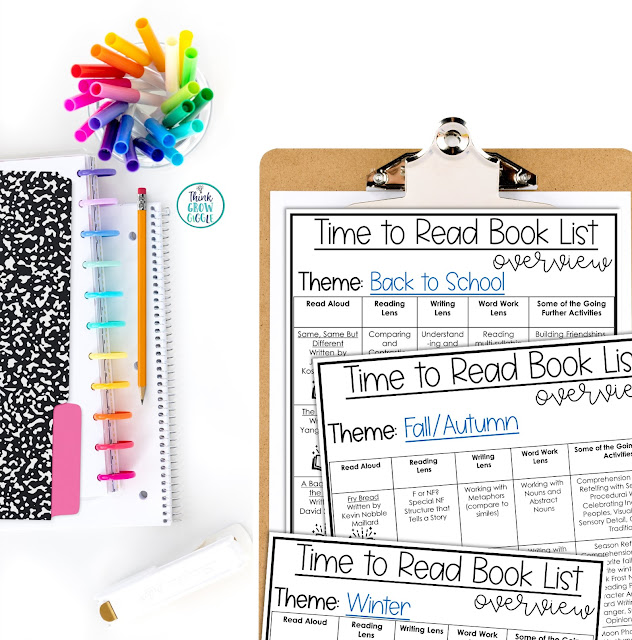
Not sure where to find appropriate picture books for upper elementary? I have some lists of favorites that you and your students will love!
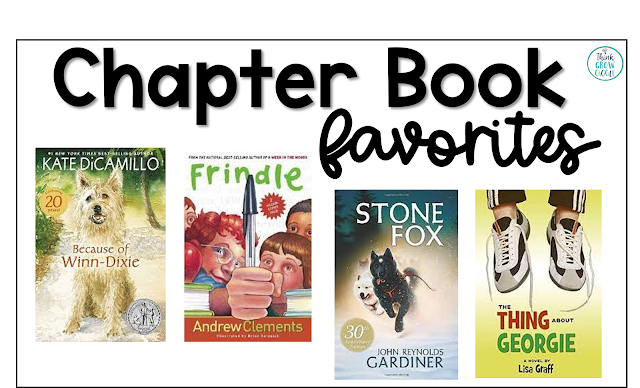
➡️Rather start interactive read alouds with a chapter book? These chapter books are always class favorites!
2. Use the Voices and Make the Sound Effects
The best part about the read alouds are different voices and sound effects that you can use to not only hook students, but to show them what fluent reading sounds like! I love to have a box of props next to my read aloud chair that I can use to help me as I read. Items I include are bells, clapping hands, and a rain shaker or shaker filled with rice. But, you do not need anything fancy! Just your voice, hands, and feet do the trick to bringing the read aloud to life. And yes, if there are silly voices and singing going on in the story, do them! You will make your students smile and love reading.
3. Revisit the Book Again and Again
Yes, I am going to say it again! Picture books should be read again and again and again!
We read picture books in my classroom multiple times, each time with a different purpose. It does NOT get boring. The kids know we are rereading it with a different lens each time, so their thoughts and discussions change. Plus, since they already know the story, their reflections are more meaningful and are often filled with connections.
When you reread previously read picture books, you help students:
- focus on the skill or objective of your read aloud lesson instead of trying to comprehend a new story AND master a new skill
- understand that good readers reread books and texts over and over to learn something new, better understand what was read, or just for enjoyment
- build confidence in their reading comprehension and retell/summarizing skills
➡️See how I use one read-aloud picture book in many different ways right HERE.
👉 Grab this FREE guide with my favorite picture books for interactive read- alouds!
It includes several different topics that you can use for each book, allowing you to read and re-read each book over and over again.
4. Plan Ahead and Annotate the Text
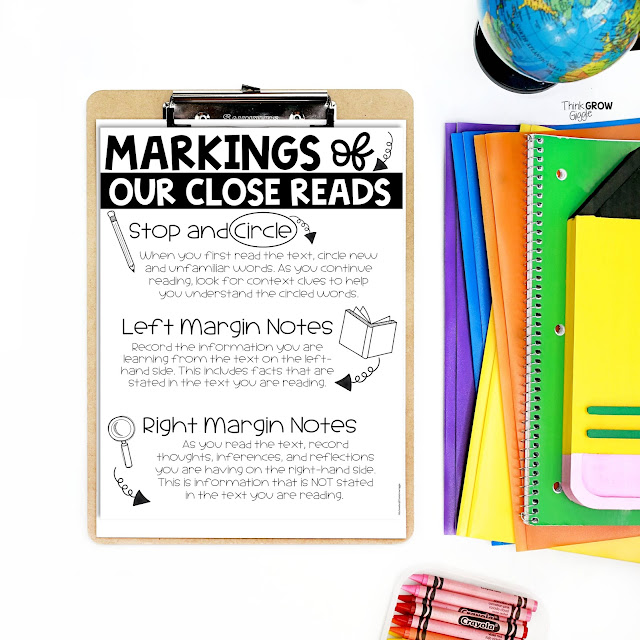
Before the read-aloud, read the text in advance and annotate it with key points, questions, and discussion prompts. This will help you guide the conversation and highlight important themes, vocabulary, or literary devices that you want to focus on.
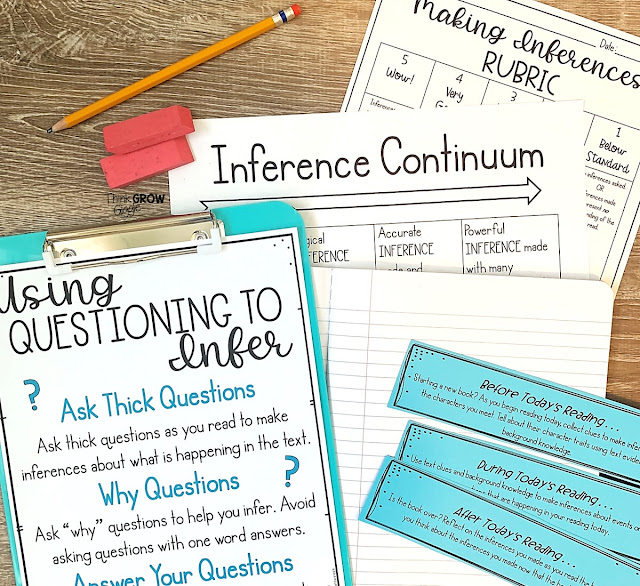
Prior to reading aloud, I also create an interactive anchor chart that will be used during the reading. I do not always do this for all read-alouds. However, I have the chart ready to go for more challenging concepts that I will bring up and teach during and after the read-aloud. This works perfectly for topics like making predictions, making inferences, and understanding character traits.
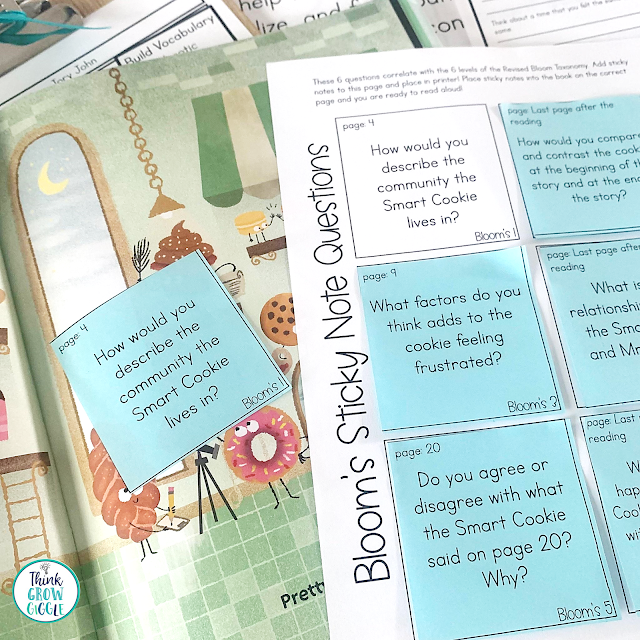
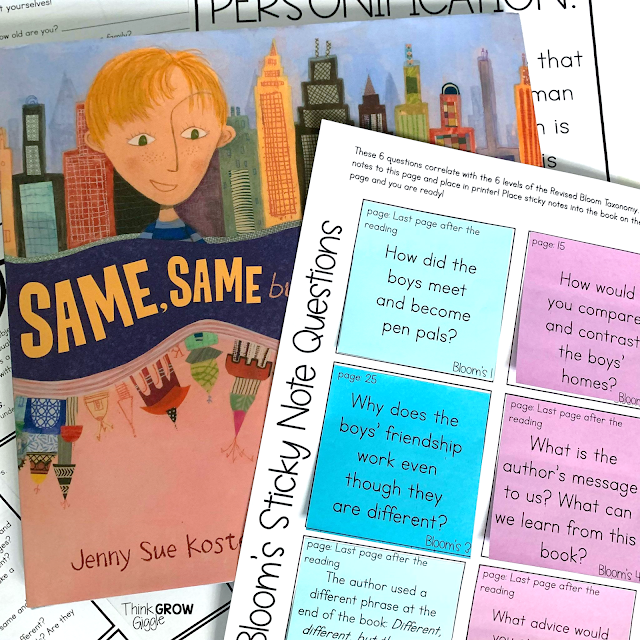
When annotating or prepping questions ahead of time, I make sure to have questions for each level of Bloom's taxonomy. Using sticky notes is a great way to do this! Especially because you can use those sticky notes again by leaving them on the pages, ready to go for next year!
5. Encourage Active Participation
Using interactive read-alouds helps you to foster an interactive atmosphere by encouraging students to participate actively. As you read, frequently stop and ask the predetermined open-ended questions, ask for predictions, and invite students to share their thoughts, feelings, and connections to the text. Use prompts like, What do you think will happen next? or How would you have reacted in this situation?
Giving students a specific read-aloud buddy or partner sets up the expectation of who they will be speaking to during the read-aloud. As time goes on, students build trust and relationships with their read-aloud buddies, making their conversations deeper and more meaningful.
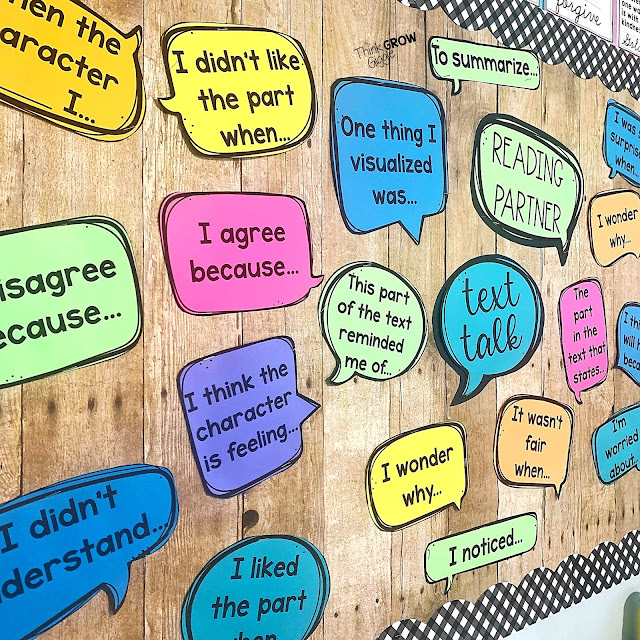
Keep the conversation going between your students and their partners by creating an accountability bulletin board that provides appropriate discussion stems that can be used for any read-aloud! These work wonders in my classroom and truly help my students discuss literature in meaningful ways.
6. Model Comprehension Strategies
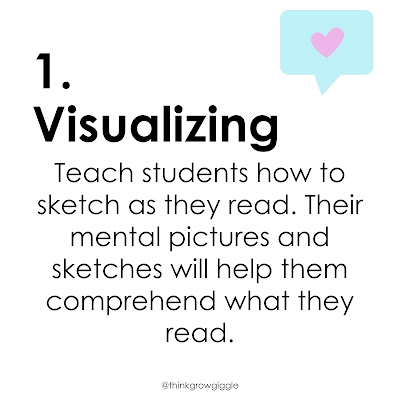
While reading, model effective comprehension strategies such as making predictions, visualizing, making inferences, and asking questions. Show students how skilled readers think critically about the text and how these strategies enhance understanding. The more you show them, the more they will carry out those strategies as they read independently.
7. Build Classroom Community
The best part of using interactive read alouds in your classroom is that it builds classroom community!
Kids, even our big kids, love to gather as a class and get cozy listening to the soothing sounds of their teacher reading aloud. Use your read-aloud time as a way to remind, practice, and instill the idea that your classroom is a safe and respectful space where students should feel comfortable sharing their thoughts and opinions. Emphasize that there are no wrong answers and that listening to and respecting others' viewpoints is essential during the discussion. Reading aloud to the whole class provides a sense of togetherness and allows true community bonding to take place!
Incorporating interactive read-alouds in upper elementary classrooms can transform reading sessions into thought provoking and enjoyable learning experiences, enhancing both literacy skills and a love for reading. While these tips will get you started, remember to tailor your approach to your students' specific needs and interests while keeping the conversation lively and engaging.
You will love reading these related articles:
Love these ideas? Pin to save them!
affiliate links: “Think Grow Giggle is a participant in the Amazon Services LLC Associates Program, an affiliate advertising program designed to provide a means for sites to earn advertising fees by advertising and linking to Amazon.” (source: Section 5)




 they try to measure too many objectives or not the right objectives in each question stem
 specific tasks that have students highlighting the answer in the text