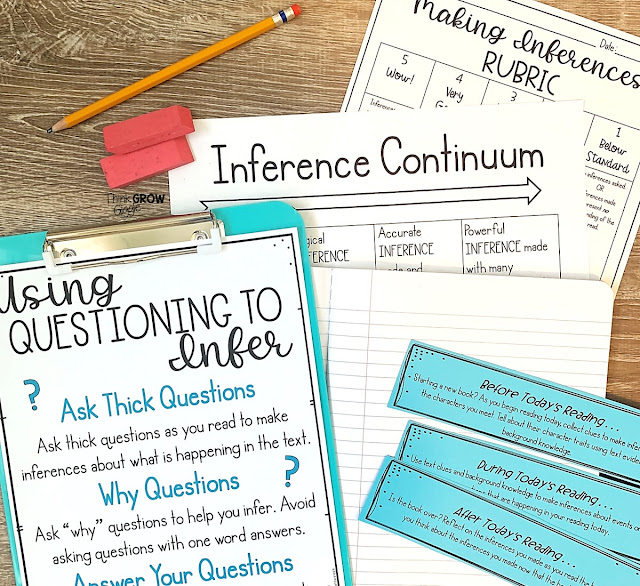
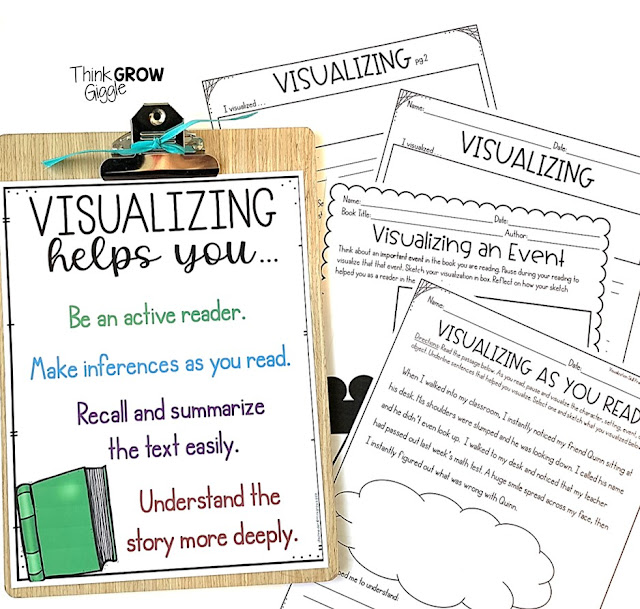
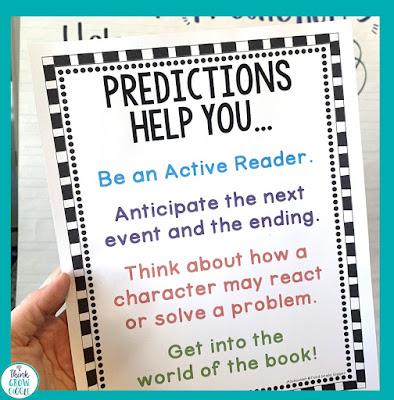
Showing posts with label reading workshop. Show all posts

Quick Tip to Strengthen Reading Comprehension Strategies for Upper Elementary

Quick Tip to Strengthen Reading Comprehension in the Upper Elementary Classroom

Multiple-choice questions are not my thing.


Before Connecticut shifted to SBAC testing, teachers wrote the yearly state exams. I was on a team that wrote 3rd-grade reading tests. This included the passages and the questions. So much professional development and non-disclosure agreements went into the multi-day training we were provided to be certified to write those exams. 

The entire process was extremely eye-opening and helped me learn a lot about what makes a good and fair assessment for students. After all that training, I stopped using multiple-choice questions to assess students in my classroom.

There is a time and place for multiple choice questions. But on a daily basis, when we read stories and passages, I do not use multiple-choice questions as a form of assessment. 

If you have any of the reading packs from my shop, you know that there are no multiple-choice questions. In fact, I often get asked why there are no multiple-choice questions...well, it is just not something I put a lot of value into when assessing students.

Multiple choice for test prep? Absolutely! I do use multiple choice questions for test prep so that students know good test-taking strategies, but I do not like to use them with daily reading activities. There are better options to use as teachers to get a pulse of students' understanding of what was read. The more you say no to multiple-choice, and yes to open ended tasks you give students as they read, the less test prep you will need to do! This is because the students have learned how to think as they read and develop good reading habits.
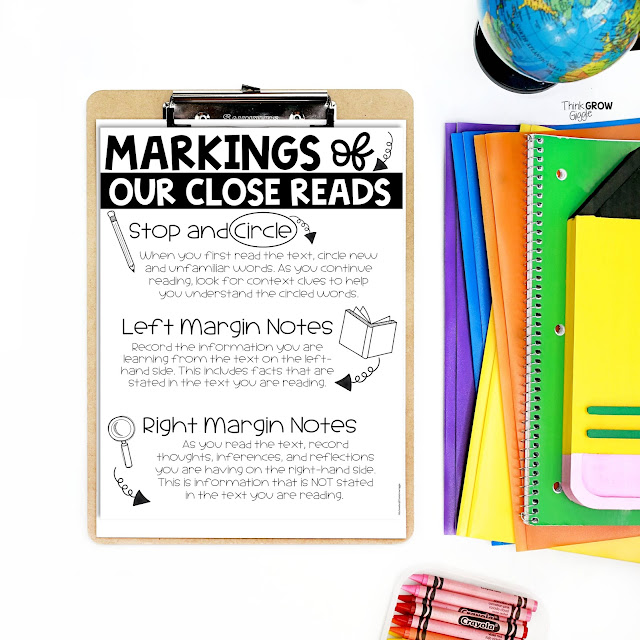


active reading tip for 3rd 4th 5th graders


I do not like using multiple-choice questions because...

👎 they try to measure too many objectives or not the right objectives in each question stem
👎 negatives in the question stem and "funny" choice options confuse students
👎 it is a guessing game that does not tell me if students know the correct answer or guessed the correct answer

Instead, I use...

👍 specific tasks that have students highlighting the answer in the text
👍 short answer and open-ended response questions that value text evidence and student-reflective opinions
👍 classroom discussions around multiple-choice style questions without the choices. 
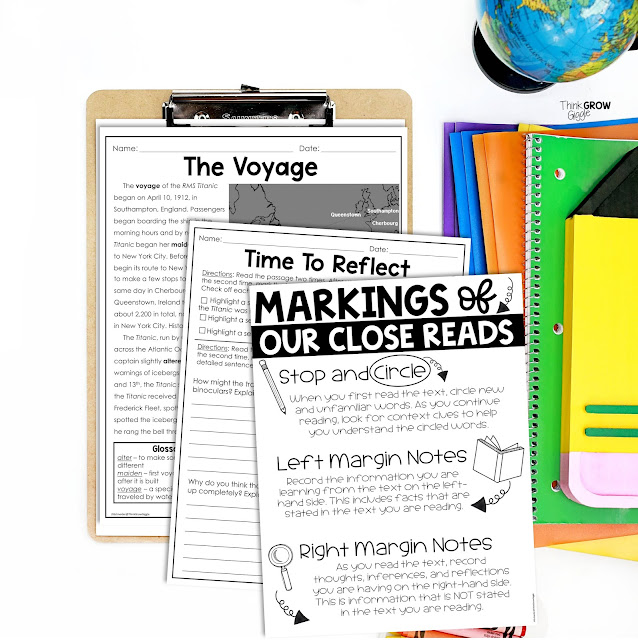

reading annotation guide for 3rd 4th 5th graders


If you want to begin to shift away from using multiple choice questions, try these simple annotation tips to get started. These tips can be used with any text and no fancy tools or resources are needed. 

Simply write these annotation tasks at the board and have students work!

Circle a new vocabulary word you learned and write your own meaning in the margin.
Underline a part of the text you found interesting and want to share with the class. 
Highlight a part of the text that made you ask a question. Write the question in the margin and a possible answer.

By encouraging students to be active readers who engage with the materials that they read rather than have them focus on picking (or guessing) an answer in a multiple choice question, their reading comprehension will strengthen. 

You can get started today using ANY book, poem, or passage that you have on hand. Simply teach students how to annotate using the suggestions above or your own, and watch them become more engaged and develop their comprehension.

Grab the FREE annotation chart and reading passage below to get started!


Looking for more reading comprehension passages and activities? Look HERE!
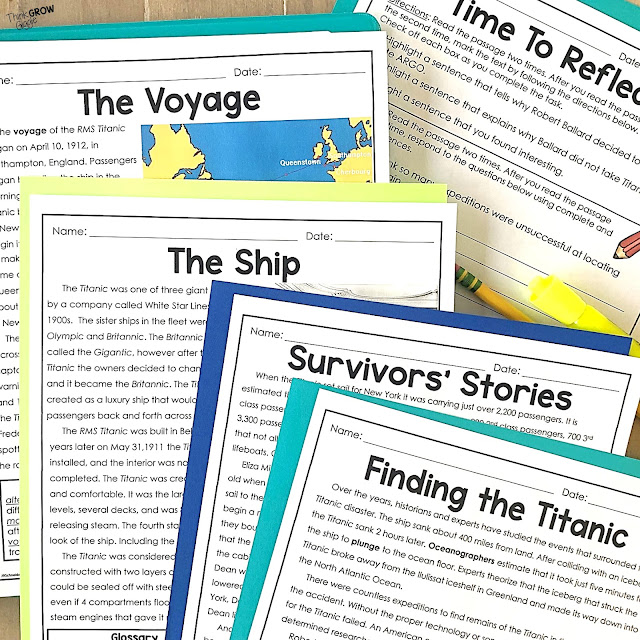
active reading tip using nonfiction reading passages


             Love these ideas? Pin to save them!
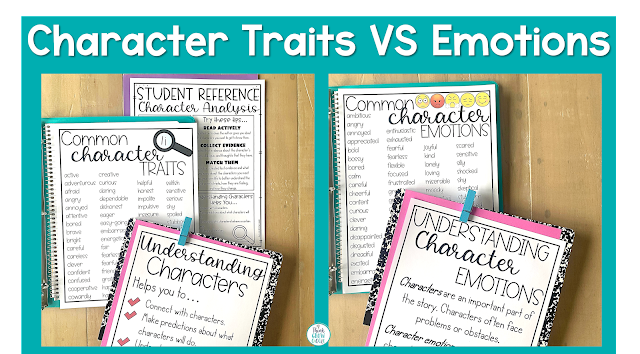
Quick Tip to Strengthen Reading Comprehension in the Upper Elementary Classroom


signature

3 Tips for Teaching Character Traits Analysis Upper Elementary

3 Tips for Teaching Character Traits Upper Elementary

As the school year progresses and your students begin to read more challenging, complex chapter books, helping them to understand the characters they meet becomes a critical part of their reading comprehension.


Students must understand the characters that they meet to help them better understand the story and theme of the book. I want my students to truly understand character traits and emotions, be able to differentiate between the two, and how those traits and emotions play a part in the choices that the characters make in the story.


That is a whole lot for young readers! But, without truly understanding the characters, the students will not be able to predict, connect, or infer as they read.


That is why character development is an important unit that I love to teach each year. It is not an easy topic to dive into with upper elementary students, but I can help! Try these tips to make your next character development unit that you teach a big success!


1. Differentiate Between Character Traits and Character Emotions


character emotions lessons for 3rd 4th 5th graders


This is such an important step! Students must learn the difference between a character trait and a character's feelings and emotions. Traits and emotions are very different. We discuss how character traits reflect the character's personality and emotions are how the character is feeling. While character traits can change throughout a story, the feelings and emotions of characters change quite frequently.


The first lesson that I do when it comes to differentiating between character traits and character emotions is with the book The Raft by Jim LaMarche. This story tells about a young boy who is upset that he has to spend the summer with his grandmother. By the end of the story, we learn how his feelings and emotions have changed, but his character traits have stayed the same. I love this book and highly recommend it as a read-aloud during your character unit.


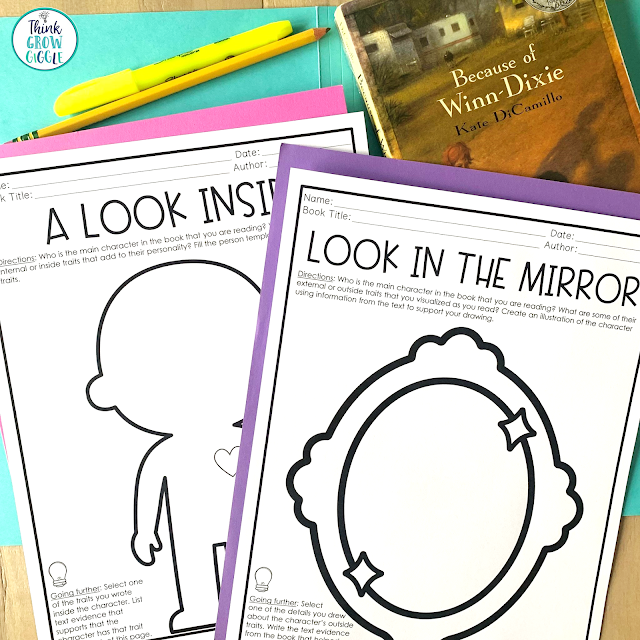
Don't forget to decide on which term you will use when discussing character traits: outside or external traits to discuss a character's physical traits and inside or internal to discuss personality traits.


Grab the free activities to start your first lesson about character traits VS character emotions!


2. Practice Character Reflections with Note-Taking


3 Tips for Teaching Character Traits Analysis Upper Elementary


Hold students accountable for practicing character note-taking with graphic organizers that help them focus on a specific character reflection task and strengthen their character understanding skills


We use character graphic organizers that focus on:

  • what the character thinks
  • what the character says
  • what the character does


These three prompts help the students to reflect on what information the author gives about the character and then use the information to infer a character trait. When we first begin our character unit, we work as a class to brainstorm different character traits and emotions that characters may be and feel. We leave an anchor chart up in the classroom for easy access, but I also give students a small size of the character trait list for their reading notebooks.


The first lesson that I do with character note-taking is always done with a picture that I have previously read. I love to use previously read books for a new mini-lesson because it allows the students to focus on the skill at hand with a book that they already heard, discussed, and understand. It allows them to be much more successful with the character analysis objective at hand. You can find any book that you have already read to your students to try this out. I love to reread The Curious Garden for this activity.


3. Discuss How Characters Change


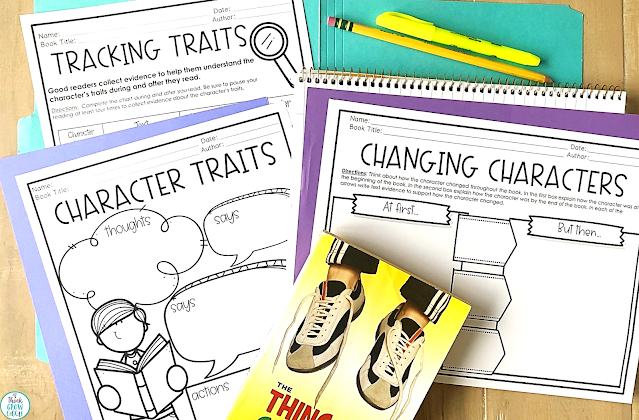
changing characters activities organizers 3rd 4th 5th grade


Focusing on how characters change truly helps the students better understand the character and the story. It allows them to make better predictions and inferences as they read, too. 


To practice this, we collect evidence to show how a character felt at the beginning of the book, and how they felt at the end of the book. Collecting text evidence is an important step to prove how the character has changed. I love to tie in visualizing during this activity. Students create sketches to show the different emotions and feelings of the character throughout the story. We revisit The Raft by Jim LaMarche to discuss changing characters. Another favorite to discuss changing characters is Enemy Pie by Derek Munson.


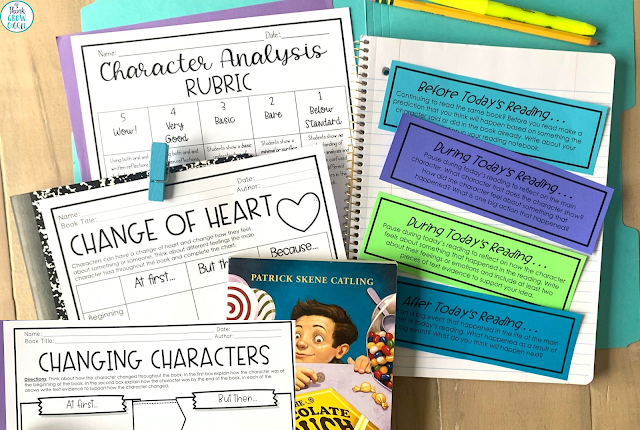
Teacher tip: I love to give students specific before, during, and after reading tasks that focus in on gathering text evidence about how characters change. This helps students focus and read with purpose.


BONUS TIP

Before having kids, head out to read their own book and dive into character analysis without you, read character-focused short stories. By choosing stories designed for character analysis, you will be setting your students up for success. These passages focus on character development, traits, and theme/life lesson, making it easy to see character traits and how they change.


Our Character Understanding unit lasts weeks. By the time it ends, the kids are bummed. They love reading and reflecting on all of the characters that they meet while reading independently and those we met during our read-aloud time. I know that the time I invest in helping students to critically analyze a character is well worth it! It not only helps them understand the characters that they meet, but also understand the overall story and plot, theme, and make connections as readers.


Grab everything you need to teach a
Character Study Unit right here:

3 Tips for Teaching Character Traits Analysis Upper Elementary


You will also love reading:


Check out my favorite character activities HERE.

character understanding and analysis activities


LOVE these ideas? Pin to save!

3 Tips to Get Started with Teaching Character Traits Upper Elementary


*affiliate links: “Think Grow Giggle is a participant in the Amazon Services LLC Associates Program, an affiliate advertising program designed to provide a means for sites to earn advertising fees by advertising and linking to Amazon.” (source: Section 5)


signature

4 Quick Tips to Engage Struggling Readers Upper Elementary

4 Quick Tips to Engage Struggling Readers Upper Elementary


Whether you have struggling readers or reluctant readers in your upper elementary classroom, these quick and easy-to-implement tips will help you to engage them and give them some strategies to build their comprehension toolkits.


When it comes to building readers, there are five components that help readers: phonemic awareness, phonics, fluency, vocabulary, and comprehension. The ideas I am sharing below will help you to strengthen the comprehension of not just struggling readers, but all readers! 


comprehension tip for struggling readers


Teach your students how to make quick sketches of the important parts of the stories they read: character and their reactions to problems, the setting, and important events. These visualization sketches are especially helpful as students begin to read longer and more complex texts. You can simply take a piece of paper folded into fourths which would allow for 8 sketches from the book or chapter. After students create their quick sketch, have them jot down what is happening with quick notes and the page number.


Want to try this out? Grab the FREE visualizing activity!


reading ideas to help struggling readers


When it comes to text length for struggling or reluctant readers, the shorter, the better! Using shorter texts helps students to feel like they accomplished a full reading activity in a short amount of time. When a text is too long, it is overwhelming for struggling readers. Using typed text is one way to use short text, but I like to use authentic reading material. That is why I use anthologies, poetry, and books of short stories. 


Try these out to get started with short, authentic texts:


build vocabulary with struggling readers


Build vocabulary by focusing on important words before reading. Previewing important words will help students' fluency and comprehension. You can even use important context clues strategies when the words come up during the reading.  After reading, reinforce the words from the text with visualization sketches to really help students understand and use the new words, building their vocabulary.


reading strategies that work


This tip is a game-changer for struggling readers! Using previously read books makes a big impact on helping students grow as readers and to learn new reading strategies. When you use a book that you have previously read with your class for a new mini-lesson, students can focus on the new skill you are teaching instead of having to figure out and understand the book AND the new skill you are teaching. This tip truly helps alleviate stress and confusion in struggling readers who will feel overwhelmed with new books. Plus, this tip truly shows students that one book can be read many times, and each time they are read with a new lens! 


When it comes to re-engaging struggling or reluctant readers, these tips will help! I have seen them work and ignite a love of reading in my own students, and I know that they will work for you and your students, too!


You will also love reading:


Check out my favorite reading strategy packs HERE.

Like these inferring activities:


Inferring Activities for 3rd 4th 5th Graders


LOVE these ideas? Pin to save!


4 Quick Tips to Engage Struggling Readers Upper Elementary


affiliate links: “Think Grow Giggle is a participant in the Amazon Services LLC Associates Program, an affiliate advertising program designed to provide a means for sites to earn advertising fees by advertising and linking to Amazon.” (source: Section 5)


signature

Must Try Tip to Encourage Students to Read a Variety of Genres

Must Try Tip to Encourage Students to Read a Variety of Genres


One goal I always have for my students each year is to help them grow as readers who love to read a variety of books, reading genres, series, and authors.


I spend a lot of time at the beginning of the year going over our classroom library, explaining how to find and borrow books, and sharing different reading genres with my budding readers. Young readers are often limited to levels books, books that they see displayed, or books that they see friends and family reading. It is our job as reading teachers to expose our growing readers to a wide range of books to read and fall in love with!


One way I have found to successfully encourage students to read a variety of reading genres is by helping students have a balanced reading diet.


The following are questions that I am often asked about how I promote having a balanced reading diet in my classroom. 


What is a balanced reading diet?


balanced reading diet genre lessons

I love explaining a balanced reading diet by comparing it to a well balanced food diet. Just like your body needs a variety of foods to help it grow, so does your reading diet. This simple analogy always helps students to see that they should be reading a wide range of genres, series, and authors.


At the start of the school year, we go over our classroom library (which is organized by reading genres) and discuss the characteristics of each genre. By clearly explaining each genre, showcasing a genre bucket, and recommending a book or two for each genre, students are engaged and curious! Leaving a genre bulletin board display up all year long truly helps and encourages students to explore different genres.


How can you encourage a balanced reading diet?


balanced diet book club card genre lesson


In my classroom, I use frequent reader club cards to encourage students to read new genres. It is a fun way to help students expand their reading and teach responsibility since these cards are non-refundable! 


These cards are fun, easy to use, and highly motivating for students! I hand out the cards and chat about them with students. After they read a book that matches one of the listed genres, they must share an oral summary about the book and explain why it is that genre.  Students can find me to chat about the book during morning work, snack time, or dismissal. This is not done during instructional time. Once all 7 genres listed on the card are stamped/punched, the student earns a reward. It is usually something simple like, lunch with the teacher, homework or morning work pass, or tickets for our weekly raffle. After the student has submitted their card for a prize, they get a new card and start all over again.


What is a reading genre challenge?


reading genre book challenge lesson


This is such a fun activity to do after you teach students about the different reading genres and it is easy to do!


Just grab a few baskets and fill them with a wide range of reading genres from your classroom library. Put the baskets in the middle of a group of students to share. Each student takes a book and explores the book: title, cover, summary, read the first chapter, or any other way they want to learn about the book. Then they identify what genre it is, write it down, and begin again with another book.


Students always love this! They learn about new genres, get talking about books with their peers, and get curious about different books in our classroom library.


How do students share a wide range of reading genres?


book talk reading genre lesson


There are two main ways that I have students share what they are reading with their peers. We have a weekly book recommendation sign up and we also do classroom book talks.


  • Book Recommendation Sign Ups: Once a week, students can sign up for an informal book share to be held during our Wednesday morning meeting. It is less formal than book talks, but allows students to share a book that they are currently reading and love. We have a sign up sheet that requires students to write the book title and author. I also ask students to leave the genre code for the book that they would like to share.  Each week we share different genres. If someone already signed up for a book share with the genre that a student wants to share, they will have to wait until the next month. This ensures that a variety of genres are shared each month.
  • Book Talks: Book talk time is a structured time in the day for students to share and talk about the books that they are reading. Through the students' prepared, short oral presentations, they try to sell or persuade their peers to read the book. This means that the students combine their reading, opinion, persuasive, and speaking skills into one meaningful activity. I love to hold book talks every Friday afternoon.
Read more about implementing book talks in your classroom HERE.


When it comes to encouraging students to read a variety of genres and truly grow as readers, try using reading challenges and balanced reading diets. These are fun ways to pique students' curiosity about different genres, series, and authors!


You might be interested in reading:


Check out my favorite reading activities HERE

Like this Visualizing Reading Strategy pack! 


reading visualizing lesson


Want more Reading Genre Resources?
Click Here.


reading genre display and lessons


LOVE these ideas? Pin to save!


using a balanced diet for reading genre lessons


signature

What are Effective Reading Comprehension Strategies?


Reading strategies and reading units are quite different. 


Often times the teaching of reading strategies gets lost in the mix of teaching reading units. While teaching reading units such as themes in literature and understanding character development are important, I have found that teaching students how to apply reading comprehension strategies is critical in helping them grow as independent and self-monitoring readers.


While reading strategy instruction can be overwhelming at first to plan and implement, it is important to teach reading strategies explicitly. This allows students to be exposed to multiple techniques to help themselves as readers and truly comprehend the text at hand. When students apply a variety of reading strategies as they read, it helps them become active readers. This is important because active reading keeps students be alert as they read. When students are active readers, alert, and applying multiple strategies as they read they are able to understand the text at a deeper level. By teaching reading strategies with explicit instruction, students are able to:

  • see a given reading strategy in action multiple times
  • learn how to apply it to their own independent reading
  • have the opportunity to practice the strategy in isolation
  • build their reading strategy repertoire 
  • learn how to apply more than one reading strategy when reading complex texts

I truly believe in the power of teaching reading strategies explicitly and am often asked many questions about reading comprehension strategies instruction in my classroom. I have compiled the questions I am most frequently asked to help you make decisions about how you want to approach the teaching of reading strategies in your upper elementary classroom.

how to teach Reading Comprehension Strategies

What are effective reading comprehension strategies?

Reading comprehension strategies help readers make sense of the material that they are reading. Proficient readers use multiple strategies as they read to make the most of the text. The most frequently used reading strategies upper elementary students utilize as they read are:

  1. Activate Background Knowledge
  2. Predict
  3. Visualize
  4. Monitor and Clarify {including use of context clues}
  5. Question
  6. Infer
  7. Summarize

What is the difference between reading strategies and reading units?

There is a big difference between reading strategies and reading units, both are important in the upper elementary reading classroom. Reading strategies are the techniques that readers use to understand the books that they are reading within different reading units. Reading units are focused units of study around a given reading topic or genre such as character understanding or learning about mysteries. To understand how reading strategies and reading units are connected, let's use a unit on character understanding. Within the reading unit of character understanding, readers will use all of the reading strategies previously taught to help them better understand the characters they meet. For example, they will predict what the character will do, visualize a character in action, infer how a character might be feeling, and question why a character did something. Without explicit instruction on how to use each of these reading strategies, students will not be able to dive deep in character understanding. We can NOT expect that students understand what it means to predict or infer, it must be modeled and taught.

Is there a specific order that you teach reading strategies?

upper elementary reading strategies lessonsYes!! Since reading strategies build upon each other, it makes sense to teach reading strategies in the order that allows students to build upon each other and begin to practice using multiple reading strategies at once. Here is the order that I teach reading strategies: activate prior knowledge, predict, visualize, question, summarizeinfer, and monitor and clarify. When I teach a new reading strategy I always use previously read books. This is a must in my classroom! By using books that students have already heard before, they can focus on applying the newly learned strategy instead of focusing on comprehending the book. The exception to this is when teaching predicting.  Students should practice making predictions with newly read material.

How do you come up with reading strategy mini lesson ideas?

The focus is always on how good readers use the reading strategies above as they read independently. The reading strategy mini lesson objectives that I use always begin with an introduction of each strategy where modeling takes place to allow students to see that reading strategy in action. Students describe what I am doing as a reader, and then we discuss what the strategy is, how it helps students as readers, and how they can put it into action independently. (Grab free strategy mini lesson ideas at the bottom of this post.) Once you introduce each reading strategy allow students time to try them out. Observe and confer with students so that you can teach any additional mini-lessons based on the needs of your students. Do not spend more than a few days teaching each reading strategy. Students will be able to have additional practice trying out each of the reading strategies as they learn new strategies and while you are knee deep in teaching reading units. (Grab free strategy mini lesson ideas at the bottom of this post.)


How do you differentiate reading strategy instruction?

What are Effective Reading Comprehension Strategies?
There are many ways to differentiate reading strategy instruction, the most effective is to make sure that students are reading books that are just right for them! This will ensure that students are able to practice the reading strategies appropriately instead of being hung up on comprehending a book too difficult or not being able to apply higher level comprehension strategies to a book that is too easy. Although I strive to have students practice reading strategy work in their own independent reading, sometimes it is necessary to provide students with a short text to practice the strategy. This is when I use task cards. It allows me to differentiate and work with each student individually, practice the strategy a few times, and then send them off to their independent reading book. I also differentiate reading strategy instruction by using a variety of graphic organizers that allow me to scaffold as needed to support students. Some students may be ready for open ended organizers right after instruction while some would benefit from a structured frame to help them organize their thoughts. By constantly assessing students, both formally and informally, I am able to differentiate reading strategy instruction for each student.
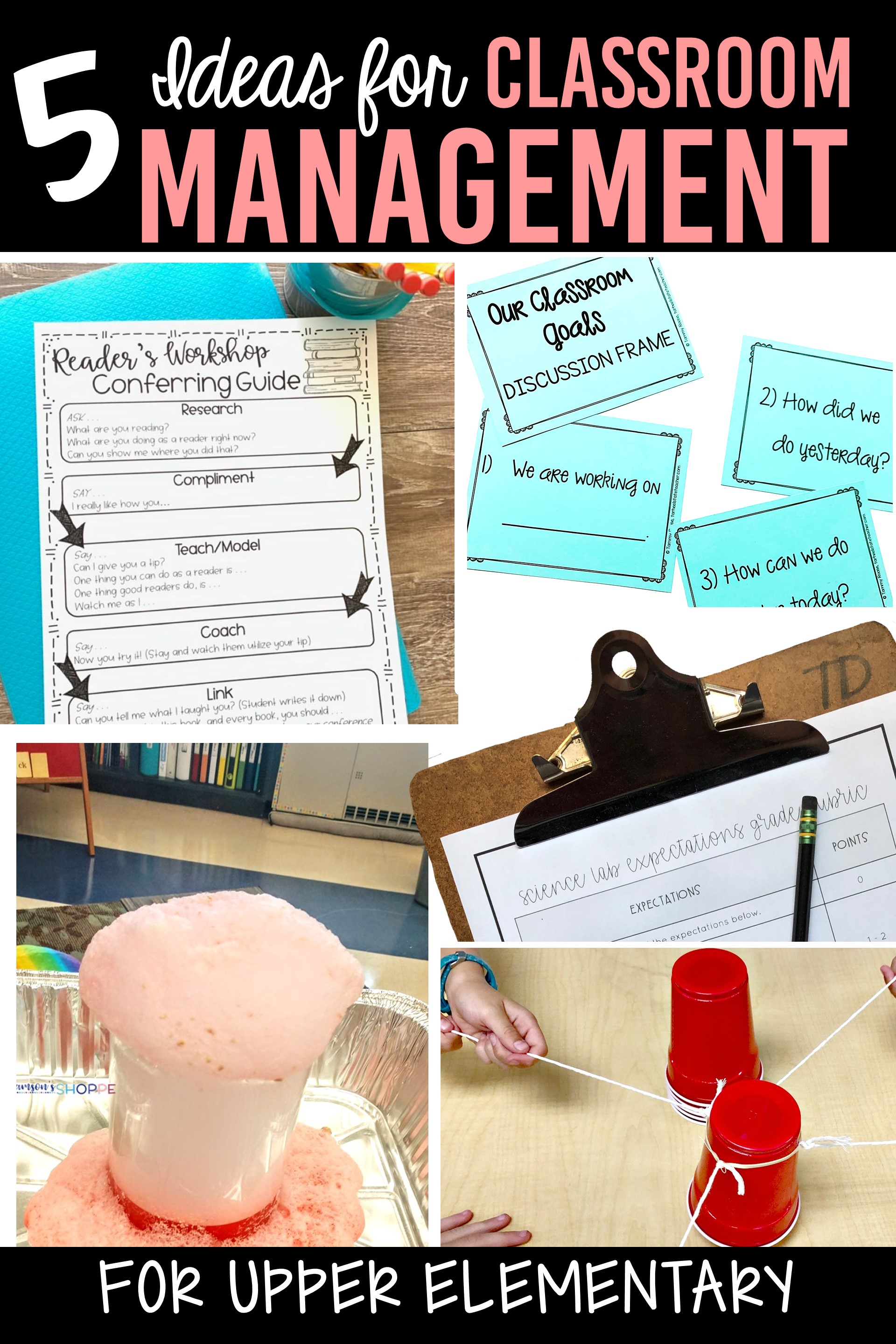
What are Effective Reading Comprehension Strategies?


Reading strategy instruction is a must for every upper elementary reading classroom. It builds student independence, encourages self monitoring while reading, and promotes critical thinking of the texts students are reading. The work that you do teaching students how to apply reading strategies will help students grow as readers as they dive deep into the reading units that you are going to teach later on in the year. Lay the groundwork now and watch them succeed all year long!


Love these ideas? Pin for later!


reading comprehension strategies upper elementary


signature

How to be Organized for Reading Conferences

organizational tips for reading conferences


I am often asked how I organize my materials, and what materials I bring along, when I hold reading conferences with my students during reading workshop


Having a designated reading conference toolbox or basket is a great way to be prepared, organized, and house all the materials that you need when you confer with students individually. By creating a toolbox or basket of the materials that you need ahead of time, you are able to use the time you have with students effectively, and not scrambling around looking for materials. Some of the materials in my toolbox are specific to a unit, so each time our unit or area of reading focus changes, I swap out those materials.


reading conference conferring guideHere is the low down on what is in my reading conference toolbox that I bring along to every reading conference I hold!

  1. Conferring Guide to stay on track
  2. Data Collection Forms or Notebook 
  3. Reader Take Away Cards
  4. Reading Strategy Teaching Points (Grab the set of teaching points that I use at the bottom of this post.)
  5. Previously Read Picture Book
  6. Previously Read Chapter Book
  7. Basic Supplies: pens, pencils, highlighters, sticky notes, book marks
  8. Reward Stickers for reader shutouts during mid workshop break

Be sure to bring along both a previously read picture book and a chapter book that was just recently read with the whole class during the unit you are currently in. These books are so important to bring with you as you can refer back to them when teaching and modeling with the student during your conference time. Since the book is familiar to them, they will be able to focus on the learning of the reading strategy you are teaching them, and NOT the comprehension of the book.


No matter what is in your reading conference toolbox, make sure it is items that will help you make the most of your one-on-one time with your students to discuss the books that they are reading and to help them grow as readers.

We are so excited to get this school year rolling and helping you focus on easy classroom management! Check out these other classroom management ideas for upper elementary!


Pin for later!


classroom management tips upper elementary


24


signature
Back to Top