Showing posts with label science. Show all posts

Classroom Earth Day Bulletin Board Ideas Elementary School

Classroom Earth Day Bulletin Board Ideas Upper Elementary

Get ready for Earth Day in your upper elementary classroom with these simple bulletin board ideas that will encourage and motivate your students to be kind to planet Earth!


Creating an Earth Day bulletin board display is an easy way to get your upper elementary classroom ready for spring and Earth Day while reinforcing the important message of caring for our planet.


A motivational Earth Day bulletin board display can add a dash of décor to your upper elementary classroom and has many other benefits.


Why should I have an Earth Day bulletin board in my classroom?

✔ Encourages Environmental Responsibility – Seeing daily reminders about being kind to the Earth helps students develop a mindset of conservation and sustainability. As students learn about human impact on the environment, this display will encourage them to care for the planet. 

✔ Creates a Kind Classroom Atmosphere – You know I love kindness in the classroom! It is always a focus each month. I love to display different kindness bulletin boards and have different kindness challenges going each month. Having a bright and uplifting bulletin board supports your kind community and a shared responsibility for protecting our planet. 

✔ Sparks Meaningful Discourse – Thought-provoking phrases and visuals can lead to class discussions about ways to reduce waste, recycle, and care for the environment. 


How can I create a meaningful Earth Day bulletin board in my classroom?

If you are just getting started with creating a classroom Earth Day bulletin board display, decide which type of bulletin board you want to create. You can create a motivational bulletin board with quotes and tips for Earth Day or a student-centered bulletin board with Earth Day student work as the focus. 


These Earth Day bulletin board ideas will help you plan, hang, and display the perfect Earth Day bulletin board!


1. Earth Day Kindness Posters - Be Kind to Planet Earth

earth day bulletin board kit for the classroom be kind to planet earth


This all-in-one Earth Day bulletin board kit makes it easy to hang a bulletin board and encourage others in just minutes! It includes 12 posters, banners, bulletin board letters, accent pieces, borders, and more! 


If you know me, you know that I love to bring kindness into the classroom with each chance I get! I display a kindness bulletin board with a different theme each season. This Be Kind to Planet Earth bulletin board is a great way to tie kindness into caring for our planet during spring and Earth Week. After we discuss the posters in this set, we begin our Be Kind to Planet Earth challenge. We track the amazing, kind deeds we do each day to help us care for our planet.


2. Dear Mother Earth - Student Writing Project

earth day bulletin board idea writing project for mother earth


This student-focused Earth Day bulletin board encourages students to reflect on how they should be treating our planet, Mother Earth. You will want to do this fun and meaningful writing activity with your students year after year! To practice friendly letter writing, have kids write a letter to Mother Earth, sharing how they help care for her. Encourage them to include specific examples from their lives and add colorful illustrations.


Grab the free writing page!


3. Stop Pollution - Persuasive Project

earth day writing display bulletin board project persuasive writing to stop pollution

This is my favorite writing project of the year! The students' persuasive writing pieces about pollution and human impact on the environment are amazing, so why not hang them and display them on your Earth Day bulletin board?


This engaging pollution persuasivewriting project is perfect for upper elementary students and doubles as a high interest writing project and bulletin board display. With the included nonfiction passages on land, water, and air pollution, students will build background knowledge before beginning an age-appropriate step-by-step persuasive writing piece to convince others to stop pollution. 


4. Great Garbage Challenge - Science Activity

the great garbage challenge science earth day project


Hands down, this science project for Earth Day is a crowd pleaser! 


The idea is simple - take a piece of garbage and transform it into something new and useful. I like to have students work in groups of 2-3 to encourage brainstorming and creativity. To kick things off, I bring in a bag of carefully chosen "garbage" and spread the items out on a table. Each group discusses and agrees on one item to repurpose, then takes turns selecting their piece. Using classroom supplies, they work together to give their item a creative makeover. When they are finished, groups present their creations to the class. For a fun twist, invite your  teacher friend from next door to judge the most creative project - students love the challenge, and their scientific workmakes a great display!


Creating an Earth Day bulletin board is such a simple yet powerful way to inspire your students to be kind to our planet! Whether you go with motivational quotes, student work, or an interactive display, your bulletin board will serve as a daily reminder that small actions can make a big difference. Plus, it adds a fun and meaningful touch to your classroom for spring! So, grab your supplies, get creative, and celebrate Earth Day with a bulletin board that encourages kindness to the Earth this April!


   Save time, grab the Earth Day Bulletin Board Kit!

be kind to planet earth earth day bulletin board kit for classrooms


                     Love these ideas? Pin to save!

Classroom Earth Day Bulletin Board Ideas Upper Elementary

*affiliate links: “Think Grow Giggle is a participant in the Amazon Services LLC Associates Program, an affiliate advertising program designed to provide a means for sites to earn advertising fees by advertising and linking to Amazon.” (source: Section 5)

0


signature

7 Solar Eclipse Activities for Upper Elementary

7 Solar Eclipse Activities for Upper Elementary


Ready for the 2024 solar eclipse in your upper elementary classroom?

When learning about phenomena, upper elementary students dive right in! Their curiosity lends itself to conversations that help them understand tricky concepts like solar and lunar eclipses. That is why I love bringing current events into the classroom!


What is a solar eclipse?

A solar eclipse occurs when the moon positions itself and passes between the sun and Earth, casting a shadow that either partially or completely conceals the sun's rays. This is considered a rare and extraordinary event because the moon does not orbit in the exact same path as the sun and Earth do.


Teaching about Solar Eclipses

Since solar eclipses are rare, bringing them into the classroom is a great way to make learning authentic and harness your students’ excitement into meaningful activities. Not sure how to get started teaching about solar eclipses? Try these ideas! From hands-on experiments to creative and art-inspired tasks, each activity is designed to not only ignite your students' curiosity but also deepen their comprehension of the upcoming solar eclipse. 


1. Read a Picture Book About the Solar Eclipse

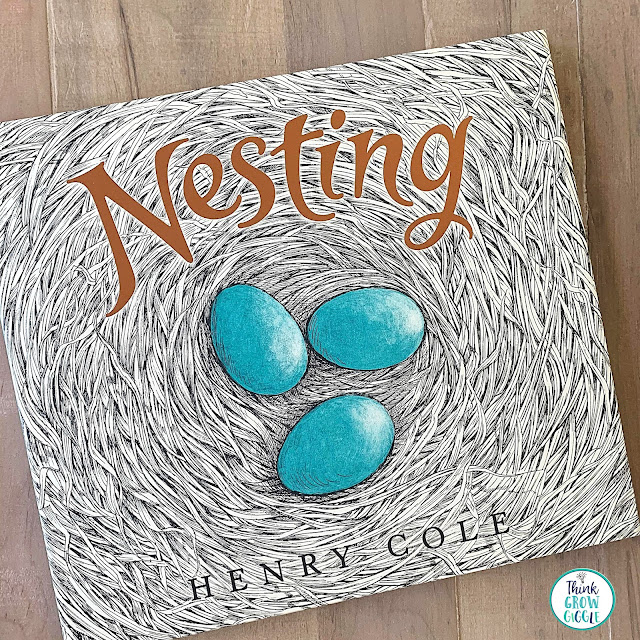
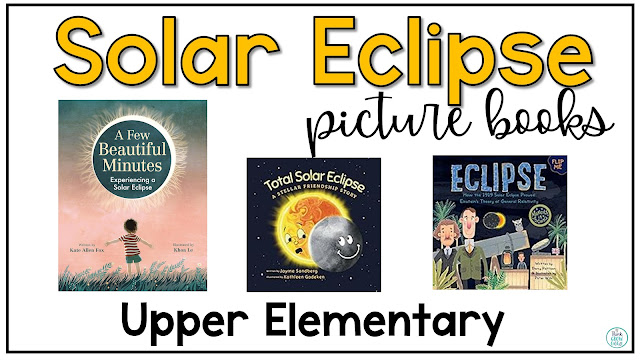
I love turning to picture books when kicking off any new unit, especially tricky science concepts! Since solar eclipses are rare, I can feel confident that the books I select to share with students will be new to them and help them visualize and see eclipses through the books' illustrations before the big event occurs! Reading picture books aloud to upper elementary students helps build background knowledge, allowing all students to have some understanding of the concept or phenomenon before our learning begins.


👉Here are three of my favorites for upper elementary...


Solar Eclipse Books for Upper Elementary
*affiliate links: “Think Grow Giggle is a participant in the Amazon Services LLC Associates Program. Purchasing does not cost extra for you and recommendations are real


2. Compare and Contrast Solar and Lunar Eclipses

Bringing nonfiction reading passages to your science lessons is a great way to connect content with informational reading skills. When I taught fifth-grade science, I saw firsthand the disconnect students had with using different nonfiction reading strategies they had learned throughout the years with science content materials they were resading. Since then, I always find ways to bring nonfiction reading skills into science class. One easy way to do that is to use informational passages to help students understand eclipses.


Want to give it a try? One way you can try using nonfiction strategies like a study of text structure during your solar eclipse study is to have students focus on comparing and contrasting solar and lunar eclipses. This one idea will have your students comparing, contrasting, critical thinking, and most importantly, understanding the differences between the two. 


💡Follow these three steps to compare solar & lunar eclipses:

  1. Read nonfiction passages about both lunar and solar eclipses.
  2. Have students interact with the text by highlighting important information about each eclipse in a different color. This will help them complete a Venn diagram easily about the two different eclipses.
  3. Sketch! Bring out the colored pencils and have students create sketch illustrations with pictures to show the difference between these eclipses. Go one step further and have students include labels and captions for their illustrations.


solar eclipse printable reading passages upper elementary kids


3. Watch a Video About Solar Eclipses to Visualize

Lunar and solar eclipses are tricky concepts!


Help your students see eclipses in action by weaving kid-friendly videos about lunar and solar eclipses into your unit. You can easily show these before any lesson, during snack, or after recess. Go one step further by having students write on sticky notes four important concepts from the videos. Collect all the students' sticky notes when the video ends and add them to a chart paper. Share the ideas that the students recorded, looking for patterns or repeated information. This will help you zoom in on the important concepts from the videos.


Try one of these lunar and solar eclipse videos:


Kindly note: As with any video you show your students please preview the video to ensure they are appropriate for your cohort of students!


4. Map Out the Totality

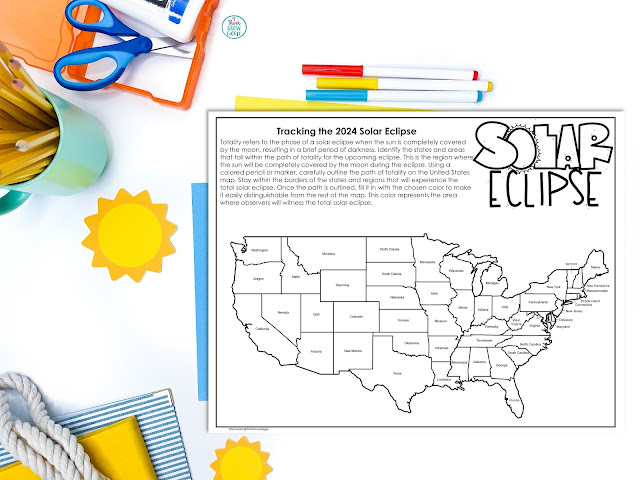
Discuss the path of the 2024 eclipse using a United States map to track it, discussing its totality. Totality is a rare and captivating occurrence that occurs only in specific locations along the eclipse path.


Totality refers to the brief and spectacular phase of a solar eclipse when the moon completely covers the sun, casting a shadow on Earth and sending the immediate surroundings into darkness. During totality, the sun's bright disk is entirely covered, revealing the solar corona—a halo of hot, ionized gas surrounding the sun. This unique and awe-inspiring moment allows observers within the path of totality to witness the sun's outer atmosphere, experience a temporary twilight-like atmosphere, and marvel at the celestial alignment of the moon and the sun. 


How to dive into the totality:


map of solar eclipse free printable for upper elementary kids


Grab the FREE solar eclipse mini pack here:


5. Get Up and Moving with a Simple Experiment

What better way to explore science concepts than with hands-on science experiences! 


💡Try this idea:

Simulate the phases of a solar eclipse using the students as models. Have each group of three students color and create a sun, moon, and earth using different size paper plates. The largest paper plate is the sun, the smallest paper plate is the moon, and the middle plate is the earth. Students can use construction paper or markers to decorate each plate. Once each plate is created, have students hold them over their heads and demonstrate how the moon blocks the sun's light during the eclipse, ensuring that all three students stand in the right positions. Have them sketch how they stood to show the solar eclipse in action!


6. Solar Eclipse Writing Prompts

Learning about any topic during science certainly lends itself to writing informational pieces. Students can write informative writing pieces to show or explain what they learned, share their opinions, and explain how something works. You can also get more creative with writing projects during science. Have your students go outside the box and write and create acrostic poems, descriptive paragraphs, and narrative pieces that weave in facts they learned. 


Try some of these prompts during your solar eclipse unit, and don't forget to grab the free solar eclipse acrostic poem template and these prompts above.

  1. Imagine you are an astronaut exploring outer space. Write a journal entry about the solar eclipse you witnessed from your spaceship.
  2. Pretend you are a scientist studying the solar system. Write a report explaining why solar eclipses happen and how they affect Earth.
  3. If you could travel to the moon during a solar eclipse, what would you see and experience? Describe your lunar adventure in detail.
  4. Create a dialogue between the sun and the moon during a solar eclipse. What do they say to each other? How do they feel about this rare event?
  5. Write a free-form poem inspired by the beauty and mystery of a solar eclipse. Use descriptive language to capture the emotions and atmosphere.
  6. Draw a picture of a solar eclipse and write a short paragraph explaining the different phases. What happens during each stage?
  7. Pretend you are a news reporter covering the solar eclipse for a kids' newspaper. Write an article detailing the important facts and interesting aspects of the event.
  8. If you were a superhero with powers related to the sun and moon, how would you use them during a solar eclipse? Create a superhero comic featuring yourself as the hero.
  9. Write a persuasive essay convincing your classmates that everyone should take a break from their regular activities to observe a solar eclipse. What makes it a special and educational experience?
  10. Write a letter to an alien pen pal explaining the concept of a solar eclipse on Earth. How would you describe the event to someone from another planet?


7. Get Creative with Solar Eclipse Art Projects

I love to have students use creative thinking and their art skills to show what they learned! Wrap up your unit on the solar eclipse with one of these ideas to help synthesize their learning.


solar eclipse creative art activities 3rd 4th 5th grade


The world of solar eclipses is fascinating and mysterious, especially for our upper elementary students!  Whether your students are aspiring astronauts, budding scientists, or someone who loves a good adventure, witnessing a solar eclipse is a memorable experience and one we should support as educators. Add different hands-on activities, art-inspired tasks, and outside-of-the-box writing projects to your solar eclipse lesson plans to help inspire students! Mark your calendars for the April 2024 eclipse, try some of these activities, and watch your students be inspired to learn as much as possible!


Happy teaching! : )


You will also love reading:


Check out these solar eclipse activities HERE.


solar eclipse reading passages lesson ideas 3rd 4th 5th grade


LOVE these ideas? Pin to save!


teaching solar eclipse for 3rd 4th 5th graders


*affiliate links: “Think Grow Giggle is a participant in the Amazon Services LLC Associates Program, an affiliate advertising program designed to provide a means for sites to earn advertising fees by advertising and linking to Amazon.” (source: Section 5)


signature

5 Easter Spring Activities for the Upper Elementary Classroom

5 Easter Spring Activities for the Upper Elementary Classroom


Celebrating special days and holidays in the classroom is definitely my thing! Using holidays, seasons, and what is happening outside of the classroom during lessons is a sure-fire way to engage students and increase their participation.


But when it comes to religious holidays, I use themes that align with the holiday rather than focusing on the religious beliefs. By taking this approach, all students can participate in the lessons, and no one is left out.


Easter is one of those holidays. It is an exciting time of the year, mostly because it is spring. The warm weather, rebirth of trees and flowers, and all things chocolate and eggs are surely on the forefront of students' minds. Harnessing that energy and excitement into content-rich activities and meaningful tasks with spring and Easter vibes is a great way to keep the students learning in your classroom all season long!


Here are five activities that I LOVE to do with students during the spring and Easter season.


1. Nonfiction Reading and Research

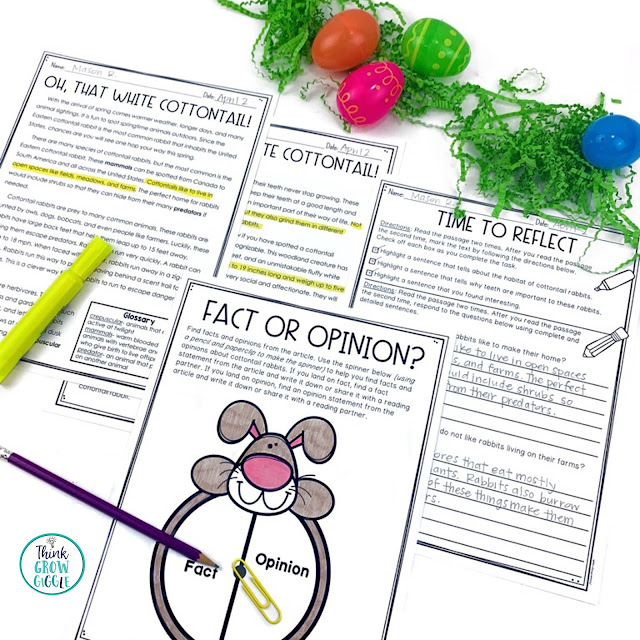
easter and spring nonfiction reading for kids


When it comes to bringing the holidays into the classroom, try focusing on non-holiday themes that align with the upcoming holiday but are not holiday/religious specific...like this one!

My students LOVE reading and writing about cottontail rabbits. We read this nonfiction article about these special bunnies. As we read, we focus on the facts and opinions in the article and of course, practice close reading strategies.

Following the reading, students must reflect on whether or not cottontail rabbits would make good house pets. It is a great way to tie together reading, writing, holidays, and real-world activities in one happy project!

Other non-holiday, nonfiction themes perfect for this time of year include:
  • How Chocolate is Made
  • Learning the History of Peeps
  • How Carrots Grow
  • Signs of Spring
  • Life Cycles
  • Plant Life and Adaptations
Try out the cottontail rabbit activity for FREE below.


2. Community Building

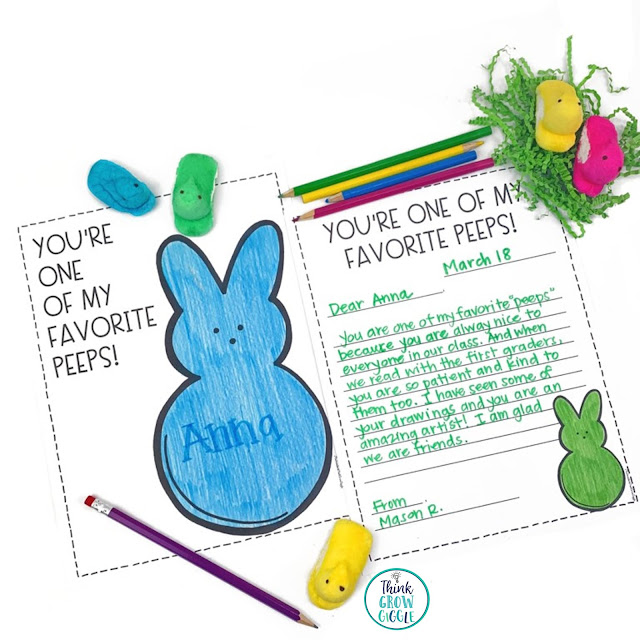
easter and spring community building activities for kids

I love using any excuse to build and strengthen our classroom community. After all, building community is an ongoing process that does not stop after the first two weeks of school!

This activity is simple yet powerful!


  1. Have students write their names with a pencil on a small piece of paper and fold it into fourths. Place all the names in a bucket or bowl.
  2. Have students one at a time randomly draw a name from the bucket or bowl, making sure that they did not pick themselves. If they pick themselves, have them show you before selecting a new name.
  3. Students then write a letter to the student whose name they picket. Their letters should be positive, upbeat and include specific examples of why they are happy to be that person's friend and classmate.
  4. For Easter, we use the theme...You are one of my favorite peeps! The kids love it! They write a letter for their classmate AND fill a peep with positive words about their classmate.
  5. When all students are all done creating the cards for their classmates, they deliver them. They really love both giving letters and receiving them!

Want to try this community-building activity? See it here.


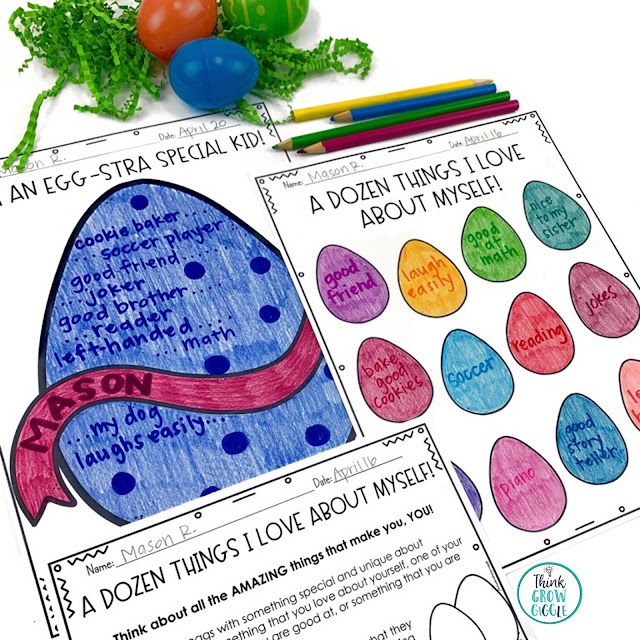
3. EGG-Stra Special Self-love


student self love activities for easter and spring


In addition to spreading love and positivity with their classmates, I love encouraging students to share some love with themselves!

During this time of year, I have students reflect on why THEY are egg-stra special. I want my students to understand that taking time to feel good about themselves is important and a great habit. Students brainstorm a dozen things that they LOVE about themselves with this activity. The kids love decorating the eggs and love celebrating themselves.

I have found the key to doing self-love activities like these is to have students share their work. Having other students celebrate and listen to these self-love writing projects validates the students' thoughts. Before beginning an activity like this, I do tell students that their projects will be shared.


4. Time for Science


Grab a pack of marshmallow bunnies and have students experiment!

Before doing anything with peeps, I love having students use their observation skills and senses to describe these candies. Students observe with magnifying glasses and record their observations. They take their ideas and write descriptive paragraphs using their senses when they are done.

After that, I have students hypothesize what will happen when the candy is placed in water. We hypothesize what will happen when it is placed in vinegar. Then as a class, we decide on another liquid to place it in. Some ideas include soapy water, orange juice, and soda. I have these on hand so that we can use what the class decides.

This hands-on activity is a lot of fun and leads kids to conclude that there is a lot of sugar in these favorite treats!


5. Try a Read Aloud

easter and spring read aloud for upper elementary

My favorite chapter book read-aloud to read with students is The Chocolate Touch written by Patrick Skene Catling. This book is a play on the classic story King Midas. Instead of everything turning to gold, everything the main character touches turns to chocolate. It is a quick read, but always well-loved by the kids. The story leads to great discussions on greed, healthy eating, friendships, and family. And of course, it is perfect timing for candy overload during Easter time!


No holiday activity list is complete without my favorite picture books! These read alouds are among my favorites to share with students during the Easter season.


Picture book read alouds perfect for spring and Easter:

See the entire list of my favorite spring read alouds HERE.


When it comes to the holidays in the classroom, stick to timely themes! You may not be teaching the holiday, but the thematic fun associated with is always a crowd-pleaser. 


You might be interested in reading:


Looking for meaningful spring and Easter activities that kids LOVE? See more HERE.


5 Easter Spring Activities for the Upper Elementary Classroom


          LOVE this post? Pin to save these ideas!


5 Easter Spring Activities for the Upper Elementary Classroom


*affiliate links: “Think Grow Giggle is a participant in the Amazon Services LLC Associates Program, an affiliate advertising program designed to provide a means for sites to earn advertising fees by advertising and linking to Amazon.” (source: Section 5)


signature

4 Groundhog Day Activities for Upper Elementary

 4 Groundhog Day Activities for Upper Elementary

Groundhog Day is one of those "burst of fun holidays" that offers a nice break from the day-to-day work of the long winter season.


This holiday of Groundhog Day offers so many opportunities for bringing rigor into the classroom disguised as fun holiday celebrations. Really, there is no better way to add instant engagement in the upper elementary classroom than by bringing the holidays into your lessons.


When it comes to February in my classroom, we dive deep into all things groundhogs in all areas of instruction: writing, nonfiction readingscience, and even test prep.


Read on to find out how easy it is to engage students in all things groundhogs!


1. Debate it Out!

4 Groundhog day Activities for Upper Elementary


Holding classroom debates is a great way to help students put their opinion and persuasive writing skills to work!

So when the calendar flips to February, I turn the classroom into a courtroom and hold a debate focused on whether or not there should be more winter or early spring. Activities like this provide students with practice in participating in argumentative discussions in a safe, structured environment.

Read more about how I run debates in my classroom HERE.


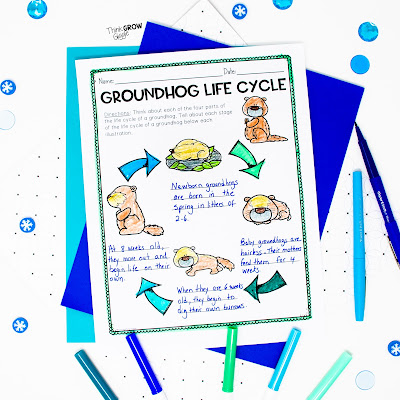
2. Let's Read Nonfiction

groundhog life cycle activity for the classroom


Nonfiction and animals are ALWAYS an instant motivator for students when it comes to reading. Why not focus on reading everything there is about groundhogs


These little marmots have a lot of  "cool facts" about them that hook students in! Did you know that groundhogs were born blind and hairless? My students LOVE reading about these little guys, their unique burrows, their interesting life cycle, and the history of everyone's favorite groundhog: Punxsutawney Phil!


All of this is easily tied into our nonfiction reading unit as we focus on:


       Nonfiction Structure: how the informational text is organized {think: cause and effect}

       Nonfiction Text Features: features found in the text to help students digest the information they read {think: captions and headings}

       Nonfiction Reading Strategies: reading strategies that help students understand the text more deeply {think: questioning and visualizing}


By incorporating the holiday into the nonfiction standards we are already working on, there is no loss of instruction time. #teacherwin


3. Make Science Connections

hibernation and groundhog activity for the classroom


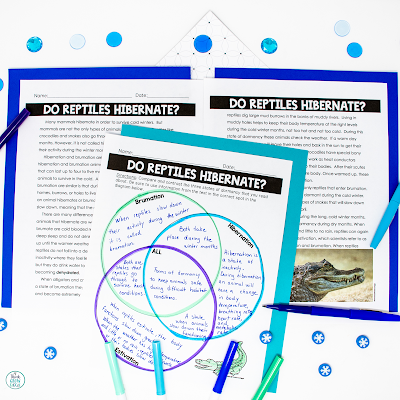
While studying groundhogs and hibernation is a great way to use classroom time to tie in Groundhog Day, go beyond the groundhog! They are not the only animals that hibernate!


Studying hibernation is a great way for students to make connections between animals in the animal kingdom. Students work together to collect information about animals that hibernate. But it is important to remember that mammals are not the only ones who prepare for winter and go into a deep sleep. Snakes, alligators, and spiders all have their own version of hibernation. In fact, animals prepare for difficult living conditions like extreme cold, extreme heat, and extreme droughts.

That is why we focus on learning and making connections between:

  • hibernation
  • brumation
  • estivation

By using nonfiction articles on these topics, having students research and gather their information, and practice close reading strategies we are able to tie together informational research, science, and close reading standards...all while engaging students with a little fun.


4. High-Interest Informational Videos 

groundhog day videos for the classroom


While I hate to admit it, yes I am required to do some test prep in the winter to get ready for the spring standardized testing. It is definitely not on the top of my favorite things to do in the classroom, which is why I do my best to make it fun.


And thanks to Groundhog Day, we can sneak in a little test prep.


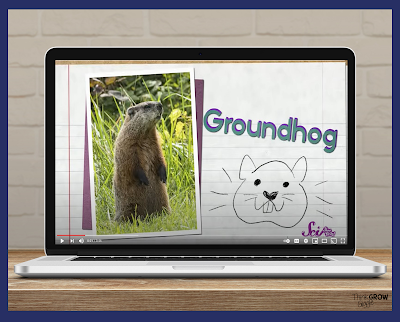
Since my class always needs a little help collecting information from multiple sources to write expository essays, we use the topic of groundhogs and Groundhog Day to practice. By mixing in informational articles and high-interest short videos, students are able to gather a lot of information on the same topic.


I collected all of my favorite and FREE educational videos about Groundhog Day that I use with students and compiled them HERE for you to use, too!


Grab the free organizers below for your students to collect information as they watch the videos. Once they have all of the information in note format, have them write an informative essay about groundhogs or the history of Groundhog Day.


I love using the holidays in my classroom to engage students and take a break from the day-to-day! When you use holidays in meaningful ways students are instantly motivated, participation increases, and authentic learning takes place!


You might be interested in reading:

Looking for more high-interest winter activities? Click the HERE.


winter activities for the classroom


                    LOVE these tips? Pin to save!

4 Groundhog Activities for Upper Elementary


*affiliate links: “Think Grow Giggle is a participant in the Amazon Services LLC Associates Program, an affiliate advertising program designed to provide a means for sites to earn advertising fees by advertising and linking to Amazon.” (source: Section 5)


signature

The Only Cursive Alphabet You Need

cursive alphabet printable PDF

I taught third graders for 16 years. I loved teaching cursive and having a beautiful cursive alphabet above my board. It made my classroom feel classic, timeless, and just plain complete. Can you relate? 


So needless to say, the year I was moved to fifth-grade math and science, my first thought was, "Can I have a cursive alphabet still?" 


That's why I created a standards-aligned cursive math alphabet. I loved having an alphabet with such valuable meaning and intention so much, that I also created a NGSS aligned science alphabet to hang along the back wall.  


This cursive content alphabet line has extended beyond math and science to include kindness, growth mindset, and ELA. And since all alphabets have the same font, graphics, and background you can interchange each alphabet! #teacherwin


These unique cursive alphabets allowed me to have both a cursive alphabet AND a content vocabulary resource for my students. The moment it was hung up, my classroom felt classic, timeless, and helpful for students once again, problem solved! 


Each cursive alphabet set has multiple letter options to help you customize the perfect alphabet for YOUR classroom and students!


Which are you going to hang in your classroom this year?

ELA cursive alphabet printable PDF

"These are a perfect way to show cursive AND important key words that we use during the year. Love all the options too!! Colorful and educational too." - Amy R.

growth mindset cursive alphabet printable pdf

"This resource is AMAZING! I love the idea of incorporating a growth mindset within the alphabet and making the posters all the more meaningful in the classroom." - Dena D.

kindness cursive alphabet printable PDF

"I absolutely love that it's not just a simple alphabet but encourages building a rich voabulary while also focusing on character education. It's even more amazing that you get a variety of choices for each letter so you can change it up, especially if there's a specific trait that needs to be focused on. Thanks so much!" -Alysia E.

math cursive alphabet printable PDF

"I loved how this resource has the cursive alphabet paired with math language and shows pictures. This really helped my students as a reference, and saved space." -Krista M.


Math alphabet now available in pastel colors: Click the image below for the pastel version.


"I'm loving my new math alphabet hanging in my classroom. I appreciate the options for vocab for each of the letters and appreciate the different Q styling. Thanks!" -Natlay


science cursive alphabet printable PDF

"The science vocabulary on these posters is great! It adds to the content of my lessons and the cursive writing is always something my students love to dabble in. We don't teach it enough anymore and they certainly it." -Kelli S.


Love these but want them in traditional print lettering? We have those, too!


signature
Back to Top