Showing posts with label picture books. Show all posts

9 Valentine's Day Picture Books for Upper Elementary

9 Valentine's Day Picture Books for Upper Elementary

When it comes to February in the classroom, especially the upper elementary classroom, love is definitely in the air!


That is why I like to fill the month of February with love, kindness, and friendship-themed read alouds that are just perfect to bring Valentine's Day into the classroom. It is the perfect time to introduce or review themes in literature while reading a variety of books. These books can be used to celebrate Valentine's Day, discuss themes and other reading strategies, and engage students in meaningful book talks.


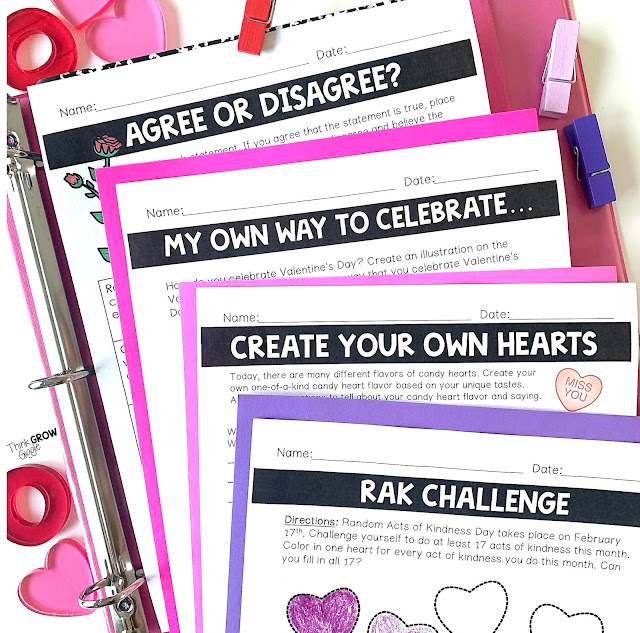
Read this list of my favorite picture books that I love reading in February with my upper elementary students. Plus, grab the free printables at the bottom of this post that go along with these books!


February read aloud for kids


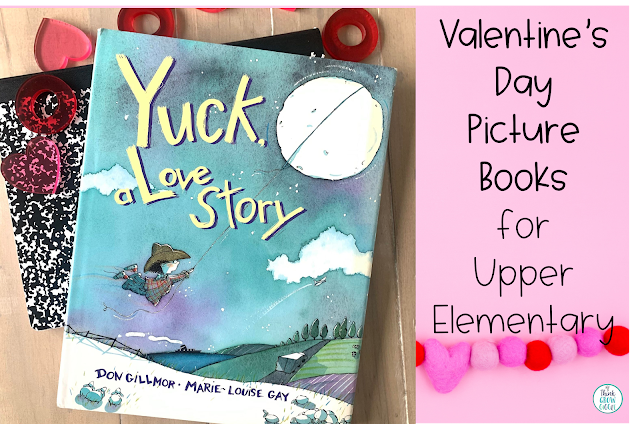
1. Yuck, A Love Story by Don Gillmore

This is my favorite story to read during February!

I love the specific details included in this book which make it perfect for visualizing lessons. This story follows two young friends as they develop a friendship, one going out of the way to give his new neighbor the moon. In the classroom, I read this story one time through without sharing the illustrations. Instead, I have students draw quick sketches of what they visualized every few pages. Then we reread the story, this time I share the illustrations, and the students compare what they visualized to the illustrations. It is a great lesson to encourage students to visualize as they read to increase their reading comprehension.


February read aloud 3rd 4th 5th graders


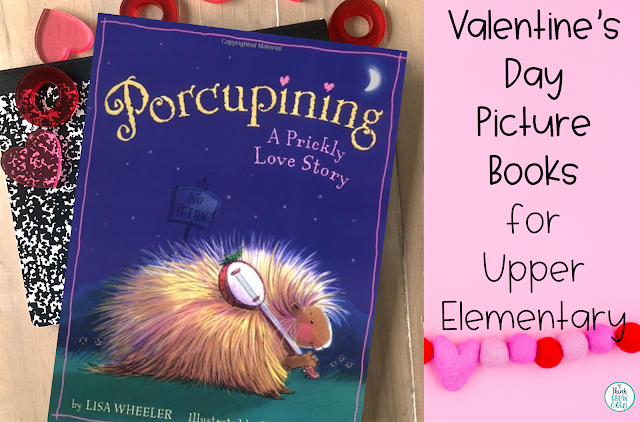
2.  Porcupining by Lisa Wheeler

This story is a fun read as the author enjoys using a play on words. Before reading this story, discuss what the word pining means as it comes up throughout the story and is one part of the play on words as the Porcupine is porocupining for a wife. Throughout the story, the Porcupine sings a song with a rhyming pattern. A fun follow-up activity would be to have your students write their own Valentine's Day poem using the same pattern.

This story follows the same theme as found in the book, Nobody Hugs a Cactus (number 9 on this list) making it perfect for comparing and contrasting themes, characters, and basic literary essay writing pieces.


february read aloud picture book


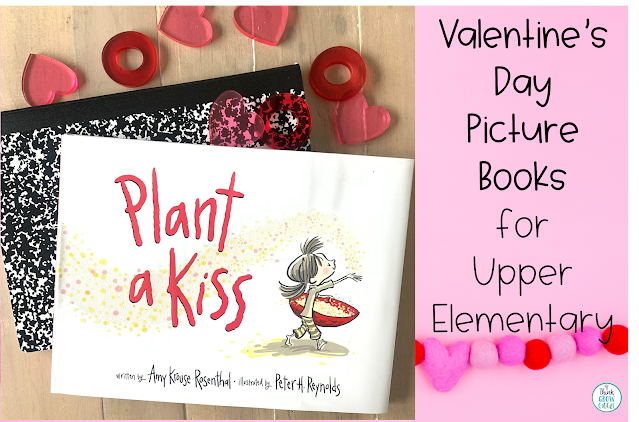
3. Plant a Kiss by Amy Krouse Rosenthal

I love this sweet simple story and how the kiss is a metaphor for kindness! Kindness can and should be shared everywhere. This is a fun one to read and then brainstorm with students all the ways that they can spread kindness in the classroom, around the school, and around their community. Get started with this free kindness calendar.


milton hershey read aloud for kids


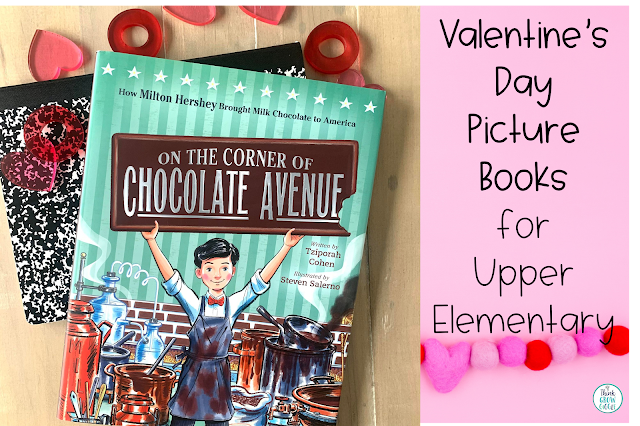
4. On the Corner of Chocolate Avenue by Tziporah Cohen

We cannot go through February without a little discussion on chocolate and what better person to read about than Milton Hershey! I love reading this book, as it is the perfect mix of nonfiction and biography with a main idea and topic perfect for Valentine's Day...chocolate! The best part about this book is about Milton himself and what a philanthropist he was. This leads to wonderful classroom discussions about doing good things for others, kindness, and showing your love and how much you care, again perfect timing for February!


valentine's day read alouds


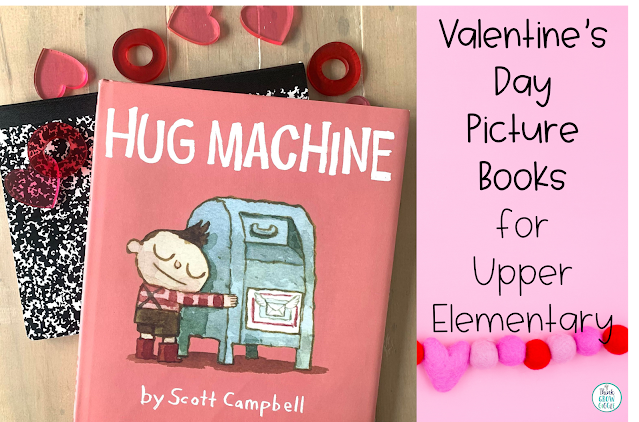
5. Hug Machine by Scott Campbell

This is a quick and fun read-aloud that truly encompasses the theme of love, perfect for Valentine's Day and February. This quick story is the perfect opportunity to introduce, practice, or review character analysis. Be sure to show your students the checklist found on the inside cover and the completed checklist on the backside cover, the kids love checking it by revisiting the story. 


february read aloud for 3rd 4th 5th graders


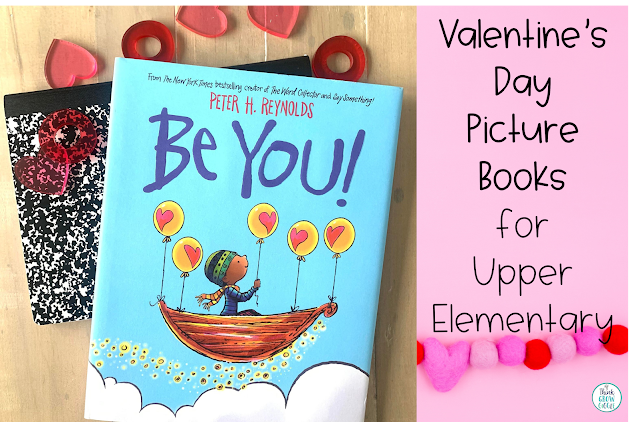
6.  Be You! by Peter H. Reynolds

Want to get in a little social-emotional learning this month? Read this book and have a discussion about self-love! My students LOVE this activity! This book is written in a fun format, each page filled with phrases and illustrations encouraging the reader to just be themselves...an important message we want our kids to hear again and again. Follow up a read-aloud of this book with a little self-love activity to display to remind your students how awesome they are! Print out the heart and have the students fill it with all the things that they LOVE about themselves. Grab the free activity that goes along with this book at the bottom of this post.


read alouds for february for 3rd 4th 5th graders


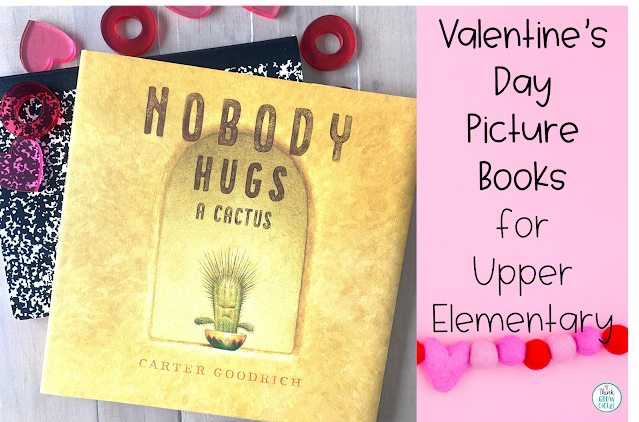
7.  Nobody Hugs a Cactus by Carter Goodrich

This sweet story tells the story of Hank, a cactus that no one wants to hug. If you are reading this one alongside a read-aloud of Porcupining, you can compare and contrast the two story's story elements, characters, and each main character's feelings and emotions. The illustrations in this book provide great support when discussing character feelings and emotions and how feelings and emotions can change throughout a story.


valentine's day reading books 3rd 4th 5th graders


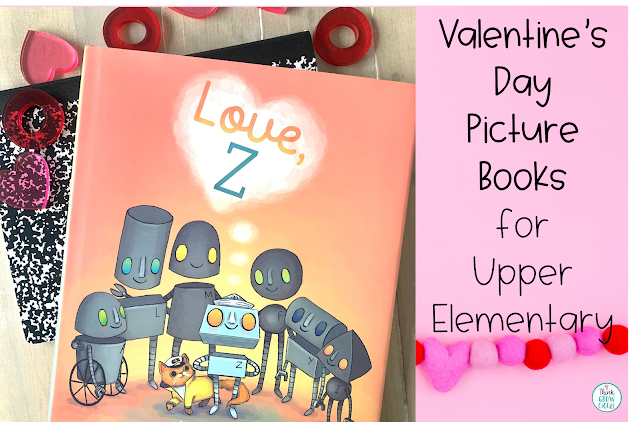
8.  Love, Z by Jessie Sima

This unique book tells the story of Z, a robot out on a mission to find out what love really is. Throughout the robot's journey many things are learned and many people are met, but by the end Z realizes home is where he or she needs to be! I love this classic story with a fun twist.


somebody loves you mr hatch reading activities


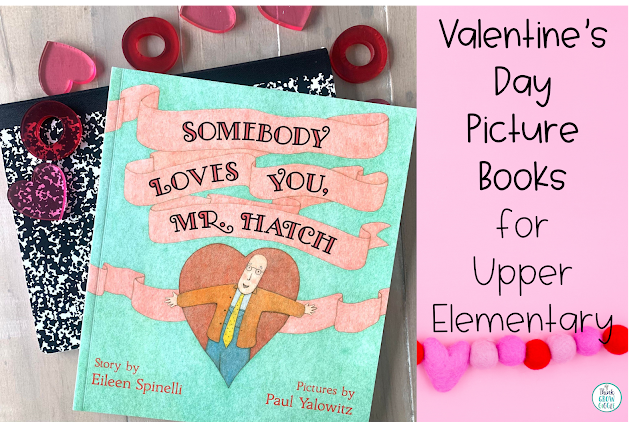
9.  Somebody Loves You, Mr. Hatch by Eileen Spinelli

February cannot come and go without at least one reading of the book, Somebody Loves You Mr. Hatch. This is one of my all-time favorites! It is perfect for discussing gratitude, friendship, and feelings of loneliness. This touching story tells about Mr. Hatch who feels alone and sad until the day he thinks that is loved when he gets a large box of chocolates. Unfortunately, it was delivered to him in error, but with a theme of friendship and kindness, it all works out for Mr. Hatch. this story is also perfect to analyze characters and discuss how characters change throughout the story. This is a must-read! 


valentine's day read aloud


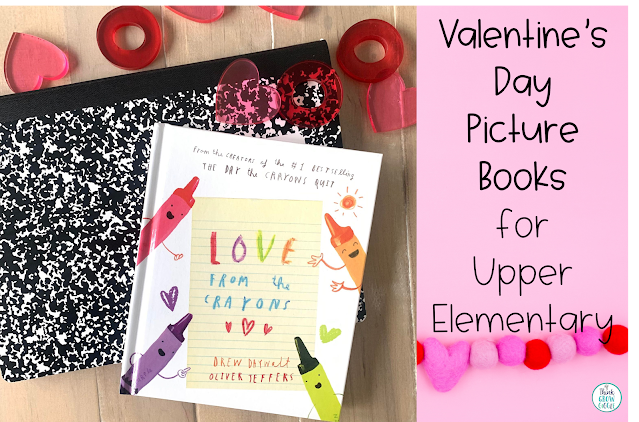
BONUS Valentine's Day Read Aloud: Love from the Crayons by Drew Daywalt

If you are looking for a book to review or practice figurative language, this is it! This book is filled with similes and metaphors for the different colors in the crayon box...all representing love for a different reason. Before reading this book, have the students make predictions about how each color represents love. After reading the book, come up with different colors that are not in the box and have students work with a partner to write similes and metaphors about those colors.


When it comes to celebrating Valentine's Day in your upper elementary classroom books that go beyond just Valentine's Day is a must for February! The books in this list are filled with themes that you will want to bring into the classroom and continue discussing throughout the year!


You will love reading these related posts:

Looking for more high-interest February activities? Click the HERE.


Valentine's Day activities for 3rd 4th 5th graders


                       LOVE these tips? Pin to save!

9 Valentine's Day Picture Books for Upper Elementary


*affiliate links: “Think Grow Giggle is a participant in the Amazon Services LLC Associates Program, an affiliate advertising program designed to provide a means for sites to earn advertising fees by advertising and linking to Amazon.” (source: Section 5)


signature

9 Halloween Picture Books For Upper Elementary

9 Halloween Picture Books For Upper Elementary


There is no better way to get into the Halloween spirit in your upper elementary classroom than with some spooky picture books!


Kids love listening to their teacher read aloud any picture book. When October comes, getting cozy in the reading area with a good old-fashioned Halloween picture book is a great way to celebrate reading, continue building your reading community, and keep your students engaged and critically thinking.


While there is an endless supply of Halloween-themed picture books, not all will help your older students grow as readers, pushing them to think critically and practice reading strategies. After years of teaching big kids, I know what Halloween books work for upper elementary. 


Below is a list of my favorite Halloween picture books that will get your students thinking, analyzing, and enjoying a wide range of stories.

“Think Grow Giggle is a participant in the Amazon Services LLC Associates Program, an affiliate advertising program designed
to provide a means for sites to earn advertising fees by advertising and linking to Amazon.”


Be sure to grab the FREE Halloween printables to go along with these favorite titles.


1. Gustavo written by Flavio Z. Drago


gustavo the shy ghost read aloud


This sweet story will have your students cheering on Gustavo as he learns the best way to make friends is to be himself, letting his interests shine through. This story truly shows how being shy can make you feel invisible. Reading this book will bring conversations about being a good friend into your classroom.


Use this read-aloud for lessons about...

  • character traits
  • problem and solution
  • figurative language


2. The Widow's Broom written by ChrisVanAllsburg


widow's broom read aloud


This read-aloud is perfect for upper elementary! The story will have readers at the edge of their seat as they ask questions about the magical broom and make predictions on each page. This book tells the story of what happens to a witch's old broom when it loses its magic. Your students will be surprised by the ending!


Use this read-aloud for lessons about...

  • descriptive writing
  • asking questions as readers
  • making predictions as readers


3. Mary Who Wrote Frankenstein written by Linda Bailey


Mary who Wrote Frankenstein read aloud


This book is a must-read during October in your upper elementary classroom. This simple biography tells how Mary Shelley wrote the story of Frankenstein. It also describes how as a young girl she was a dreamer and used her imagination. These skills helped her become a famous writer that is known worldwide even hundreds of years after her most famous story was published. A truly inspirational tale.


Use this read-aloud for lessons about...

  • how writers come up with ideas
  • reading and writing biographies
  • brainstorming, creativity, and using your imagination


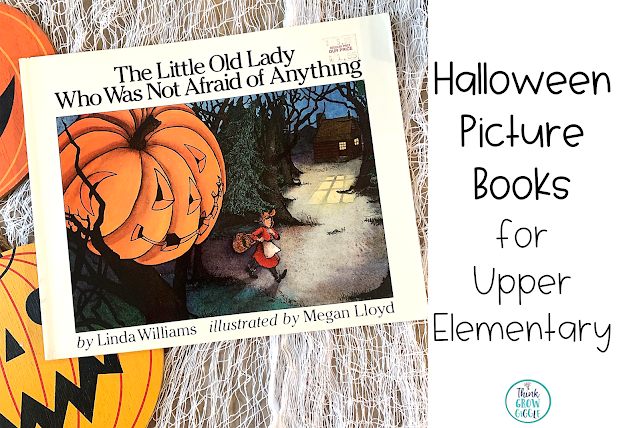
4. The Little Old Lady Who Was Not Afraid of Anything written by Linda Williams


the little old lady who was not afraid of anything read aloud


This is a fun read aloud that is perfect to practice any reading strategy, especially making predictions and summarizing. With a predictable format and an easy storyline to retell, students can easily summarize this story. This book tells the story of a an old lady who is visited by different things that are trying to scare her, but as the title says, she is not afraid of anything. Just when the reader thinks that she is about to be spooked, something clever happens! Will your students be able to predict the ending?


Use this read-aloud for lessons about...

  • figurative language: onomatopeia 
  • making predictions
  • summarizing


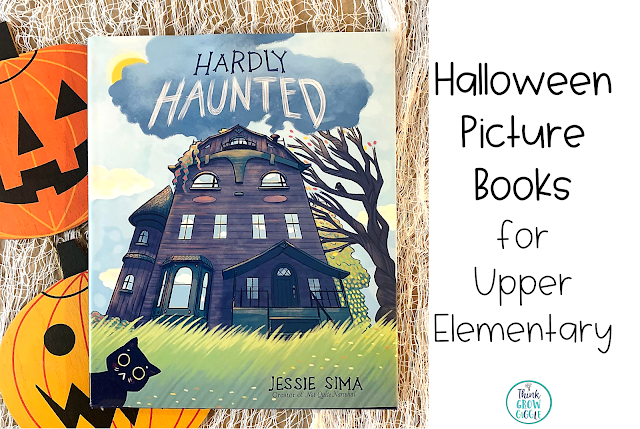
5. Hardly Haunted written by Jessie Sima


hardly haunted read aloud


I love books written by Jessie Sima, and this one is no exception! This book tells the story of a spooky old house who does not want to be haunted...until something happens one night to change its mind. This is a quick, fun read that is perfect for the spooky season.


Use this read-aloud for lessons about...

  • figurative language: personification
  • descriptive writing


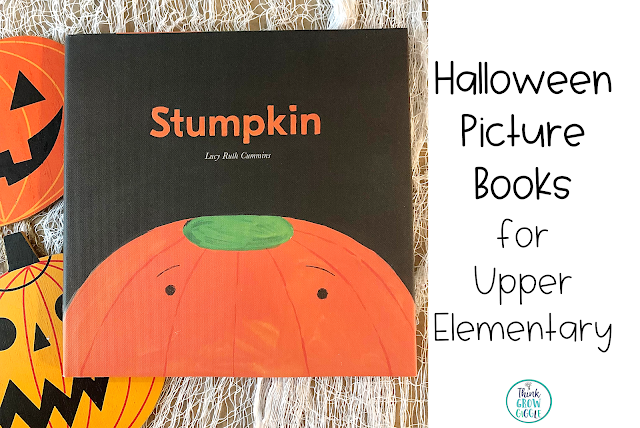
6. Stumpkin written by Lucy Ruth Cummins


stumpkin read aloud


Stumpkin is such a fun book to share! Poor stumpkin does not have a stem like the other pumpkins who are bought by families and turned into jack-o'-lanterns. Just when stumpkin gets down on himself, something amazing happens to him! This book will leave such a lasting impression on your students that when they go pumpkin picking, they will surely pick a stumpkin!


Use this read-aloud for lessons about...

  • figurative language: similes
  • story elements
  • being yourself and loving yourself as you are

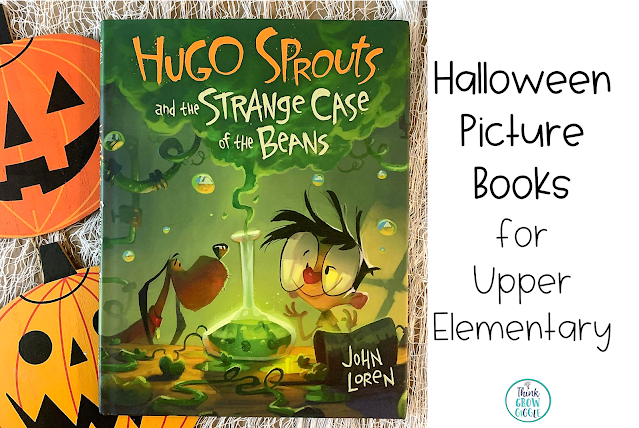
7. Hugo Sprouts and the Strange Case of the Beans written by John Loren


hugo sprouts and the strange case of the beans picture book


This one is not Halloween themed, but it sure is perfect for the spooky season! Hugo does not like being the smallest in his family,not one bit. To do something about it, he concocts a special brew that makes him bigger. Along the way as he gets bigger and bigger, he learns a valuable lesson with a little help from his best dog pal. Definitely a must read, especially for classrooms that are looking for Halloween alternatives.


Use this read-aloud for lessons about...

  • paying attention to fonts, illustrations, and sidebar writing
  • theme, life lesson, author's message
  • being yourself and loving yourself as you are


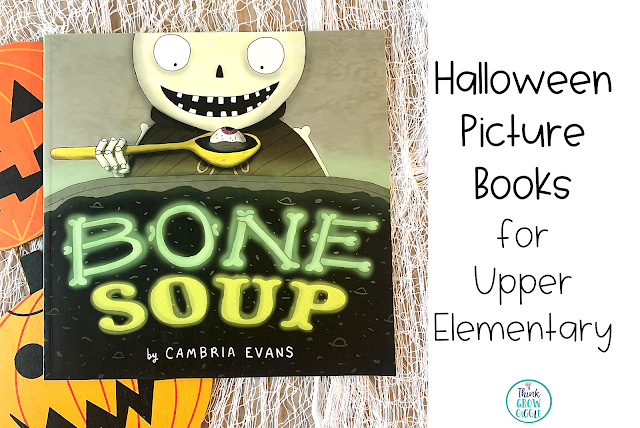
8. Bone Soup written by Cambria Evans


bone soup read aloud


This is a fun read for Halloween time in your classroom. This twist on Stone Soup follows Finnegan, a skeleton as he collects ingredients to make his Bone Soup. Your students will love following along as Finnegan meets new characters and adds another ingredient into his soup. I especially love the illustrations and text dialogue in this story.


Use this read-aloud for lessons about...

  • problem and solution
  • dialogue 
  • compare and contrast lessons: compare to this version of Bone Soup or Stone Soup


9. Creepy Crayon (and series) written by Aaron Reynolds


creepy carrots read aloud


No Halloween picture book list is complete without the popular "creepy" series written by Aaron Reynolds and illustrated by the amazing Peter Brown. They are all amazing, but I am going to review Creepy Carrots here, as it was the first written and the first one you should read!


Creepy Carrots is a must read! This cleverly written story follows Jasper Rabbit as he is stalked by the very carrots that he wants to pick and eat. This book is filled with juicy words, fantastic illustrations, and a clear problem and solution structure that makes it easy for students to summarize. As students listen to Jasper's story they too will wonder if Jasper really is seeing creepy carrots. Such a run read aloud that will make you fall in love with Jasper and want to read all of the other books in the series. 

Use this read-aloud for lessons about...

  • problem and solution
  • dialogue 
  • compare and contrast lessons: compare to this version of Bone Soup or Stone Soup


Take a look at the others in the series:


10. Bonus Book Recommendation: The Spider and The Fly written by Mary Howitt


the spider and the fly picture book


While this is not a Halloween story, it surely is perfect to read during the month of October as kids are focused on all things Halloween like spiders! This book is based on the poem by Mary Howitt and tells a cautionary tale about what happens when we meet flattering strangers. This book is perfect to discuss author's message and theme. We often refer back to this book throughout the year for different purposes.


Use this read-aloud for lessons about...

  • problem and solution
  • theme, life lesson, author's message
  • rewriting the ending of stories


When it comes to Halloween excitement in the classroom, don’t ignore it! Instead, use it to your advantage. Grab one of these titles and watch student engagement and meaningful reading discourse skyrocket!


Looking for more meaningful Halloween activities for your students, like these Halloween Haikus?
Take a look HERE.


Halloween Writing Activity Upper Elementary


Love these ideas? Pin to save them!


Halloween Read Aloud 3rd 4th5th grades


*affiliate links: “Think Grow Giggle is a participant in the Amazon Services LLC Associates Program, an affiliate advertising program designed to provide a means for sites to earn advertising fees by advertising and linking to Amazon.” (source: Section 5)


signature

Teaching Grammar with Picture Books for Upper Elementary

Teaching Grammar with Picture Books for Upper Elementary


Ahh, grammar. The never-ending list of rules we need to make interesting enough to be engaging, AND find the time to make sure we get it into our daily schedule!


Luckily, there is a multitude of amazing picture books to reinforce these grammar rules, engage students, and help us make sure we are addressing important grammar skills each week. There really is no better way to introduce, teach, and review important grammar skills than with an engaging picture book.


While you can read just about any picture book and pull out mentor sentences and examples of grammar rules in action, the following picture books are must-reads for any upper elementary classroom when focusing on specific grammar rules.


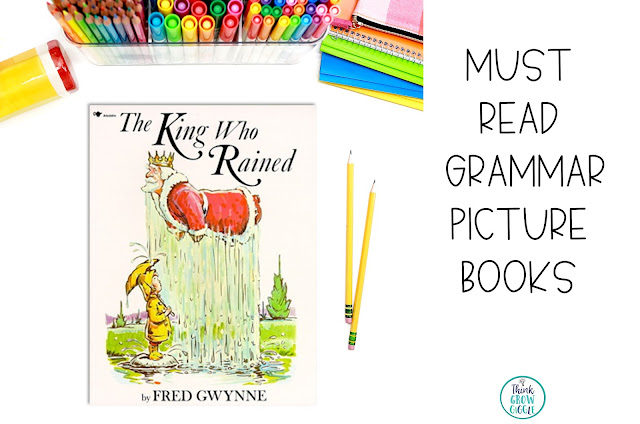
1. The King Who Rained: written by Fred Gwynn


picture book for homophones


Although it’s a little older (I read this back in elementary school as a student) it is one of my favorites. The illustrations are perfect for creating a visual understanding of homophones and homonyms.  Challenge the kids to come up with their own hilarious “daddy says” homophone, and put them together in a class book to enjoy. The illustrations truly make the book memorable, solidifying this tricky concept for students.


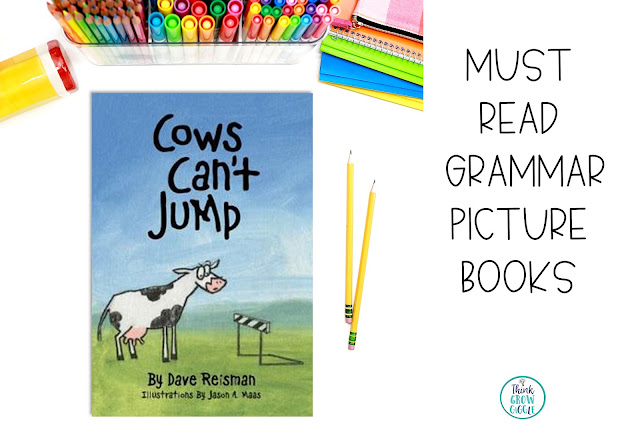
2. Cows Can’t Jump: written by Dave Reisman


picture book for teaching verbs


In this simple book, readers are introduced to a wide array of very diverse and richly dynamic verbs. Verbs like “saunter” and “slink” can spark great conversations about how vivid verbs can transform students' writing pieces.  The class will enjoy defining (even acting out) these interesting verbs. A read-aloud of this book can be expanded into a research project to determine if these facts are true or not true about each animal.


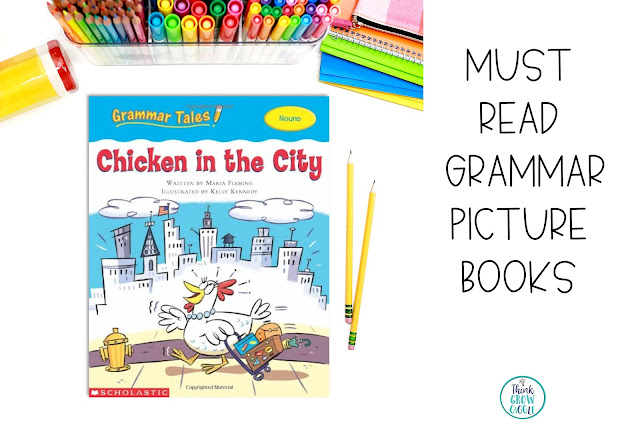
3. Chicken In the City: written by Maria Fleming


picture book for teaching nouns


There is no shortage of cuteness in this book, and that is only one of the reasons I love it! The idea of a chicken throwing her corn kernels in a suitcase, grabbing her pearl necklace, and heading to the big city just makes me giggle a little every time. This book is great for so many reasons, but it is the perfect noun resource. Some of the pages are explicitly labeled with nouns. Another reason it shines and has to be on the top grammar picture book list is that there is a change of setting. You see the array of farm nouns, and then she heads to the city and there are nouns there too. This opens the door for a great compare and contrast opportunity. Make it extra fun by turning the circles of your Venn diagram into oval eggs! Or keep it simple and have your students create a list of nouns that they see in their classroom or at home!


picture book for teaching collective nouns

Once that basic noun knowledge has been activated, there are some books that are perfect for diving into the different categories of nouns. When you want to talk about collective nouns, this is a go-to book. It’s engaging in that it introduces students to animal groups they may not be familiar with, and who doesn't love hearing new animal facts? Extend this book read by having students name their family as a collective noun. A _____ of Smith’s, Wilson’s, Brown’s, etc. Go one step further and have them explain and defend the collective noun they choose to use.


Try these free and engaging noun activities to help you get in grammar this year!


5. Pig, Pigger, Piggest: written by Rick Walton


picture book for teaching superlative adjectives

Adjectives are one of the most colorful grammar units to teach, and when you specify with superlatives, it can be even more fun! The illustrations alone are worth this read- the three pig brothers make me laugh every time I look through it. As you read this book, guide students to describe the pigs in great detail, emphasizing that superlative detail in the Piggest Pig of all. Extending this with a simple art project is so much fun! Have students draw three circles with three objects. In each circle, have your students draw a picture of objects to match a given superlative set of adjectives: small, smaller, smallest or try yummy, yummier, yummiest. Students love this activity and get more creative with each illustration. 


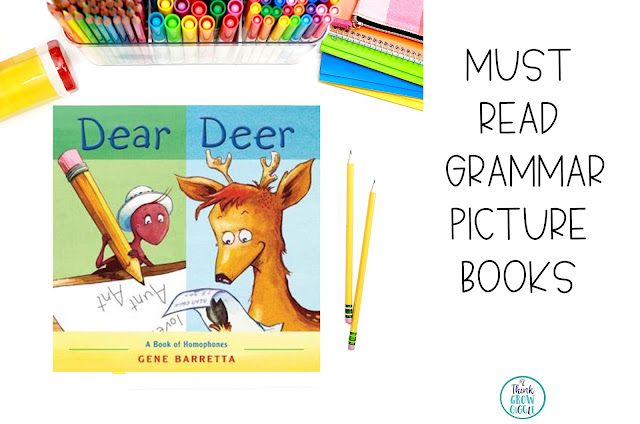
6. Dear Deerwritten by Gene Barretta


homophone read aloud for grammar lesson
This book is another one that focuses on homohones in a fun and simple way. Each page has one sentence, but that is all it takes to help students understand the different meanings of words that sound the same. Brainstorm lists of more homophones have students create their own page to add to this book. 


7. Hairy, Scary, Ordinary: What is an Adjective: written by Brian P. Cleary


adjective picture book read aloud


This book is a fun read and truly breaks down the concept that adjectives can describe how many, what kind, and how big something can be. Since adjectives describe nouns, review the concept of nouns as you read aloud this book. Create an anchor chart sized T-chart. On one side label it adjective and on the other side label it noun. As you come across an adjective, ask the students what noun it describes. Keep track of all of them in the book. This will lay the important ground work for your unit on adverbs and how they describe verbs.


8. Eats, Shoots, and Leaveswritten by Lynne Truss


picture book for teaching commas


Comma usage is always so tricky for students! This read-aloud will help your students understand the why commas are so important to use as writers. The author writes two different sentences, one with a comma and one without. The illustrations truly help the students see how different the meaning of the sentence becomes when you forget to use that comma! This book will help to make teaching students how to use commas correctly an important part of your punctuation and grammar lessons!


9. Semicolons, Cupcakes, and Cucumbers: written by Steve Newberry


picture book for teaching punctuation


This fun read-aloud follows different punctuation marks as they have a conversation showing off how they work! I love that commas and semicolons are included in this book. As you read this book, be sure to change your voice and expression to match each punctuation mark, to truly help students see how punctuation is not only important to them as writers, but also as readers. Invite students up to help you "act out" this read-aloud, taking on the role of the different punction marks. Grab a free activity to use with this book right HERE


Add these books to your grammar units for instant engagement and memorable lessons for your students! You will find that by using grammar skill-specific and focused picture books students will understand the skills better and independently apply the strategies they learned to their own writing.


Looking for more meaningful grammar activities for your students? Try these!


grammar activities for upper elementary


Love these ideas? Pin to save them!


Teaching Grammar with Picture Books for Upper Elementary


*affiliate links: “Think Grow Giggle is a participant in the Amazon Services LLC Associates Program, an affiliate advertising program designed to provide a means for sites to earn advertising fees by advertising and linking to Amazon.” (source: Section 5)


signature

7 Must Read Picture Books for Teaching Inferring in Upper Elementary Classroom


There is nothing more fun and engaging for upper elementary students than making inferences! Playing charades, solving mysteries, and reading books that require inferring are always some of my go to ways to introduce inferring with upper elementary students. 


How else do I love to introduce and practice inferring with my students? Using picture books of course! There are so many picture books that are perfect to help students focus on the skill of inferring by asking questions and collecting evidence to help them infer and truly understand the story and the author's message


Below is a list of MUST use mentor texts that upper elementary students love that requires that the readers make inferences to truly understand the story.


Knots on a Counting Rope written by Bill Martin Jr.


This touching story about a young boy who loves to hear the story about the night he was born, requires students to make inferences as they read, trying to discover what exactly makes this boy special. Through your questioning and evidence collection that you do with your student as you read this book, students will make inferences that help them discover that the young boy is blind. This is a story that makes a great mentor text for questioning, inferring, summarizing, character analysis, theme, and so much more! You will want to revisit and reread this book again and again for many different lessons!


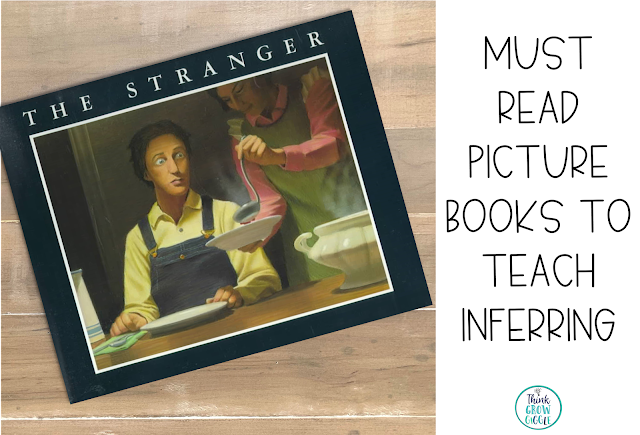
The Stranger written by Chris Van Allsburg


On a drive one night, a family accidentally hits a man with their car. The family loads him up and brings him home to be checked by the family doctor.  The students have to think about who the man is given all the things in the story that make the man “strange”. He cannot talk, animals flock to him, and he seems confused by very common and simple items. Through class discussion and context clues, see if you can infer who thisnameless man is! Grab some no-prep materials to go along with the story here


The Wretched Stone written by Chris Van Allsburg


Hands down, my favorite book by favorite author, The Wretched Stone provides so many opportunities for students to infer and figure out just what the stone really is! This book is not just great for learninghow to make inferences, but also as a springboard for important topics such as being involved in the arts and limiting screen time! Chris Van Allsburg is a pure genius!


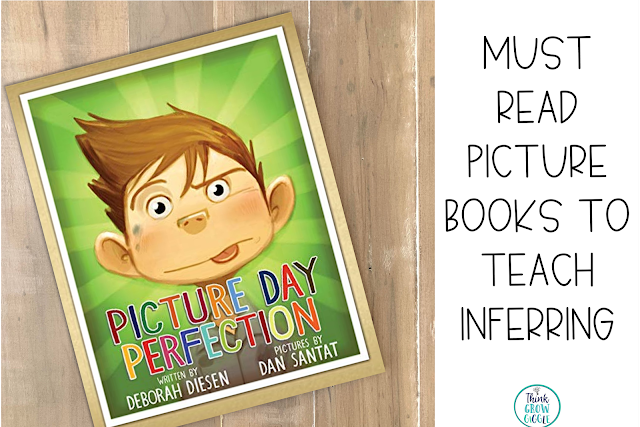
Picture Day Perfection written by Deborah Diesen  


We all have that picture day story we love to tell, but this one takes the cake! Syrup in his hair, a bench as cold and hard as an iceberg, and a late start to the day are going to make for a picture this student will never forget. Follow him on his journey to get the “perfect picture”... and see if your upper elementary students can infer what his true intentions were all along!


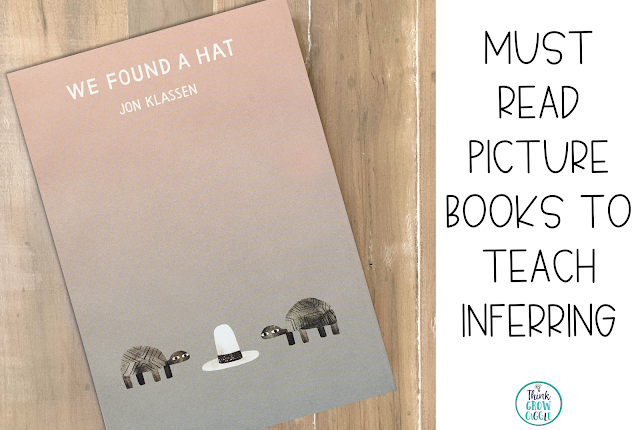
We Found a Hat written by Jon Klassen


When there is only one hat, but two heads… what is this duo to do?! In this great mentor text, explore inferring feelings, while also examining what friendship means. How do the turtles feel about what they want individually, and how do they feel about each other? The book is a very simple text, with minimal words but great illustrations. Teachers, brace yourselves because this one can lead to some very touching conversations about sacrifice for self and love of others.


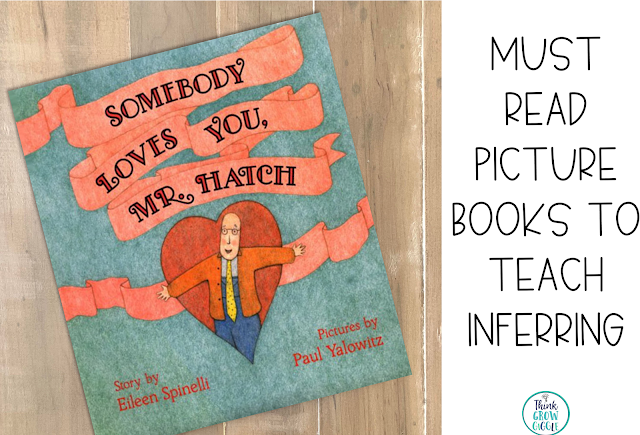
Somebody Loves you, Mr. Hatch written by Eileen Spinelli


You do not have to wait until Valentine's Day to read this classic! When a man who keeps to himself gets a mysterious package, his whole demeanor changes. Mr. Hatch, a loner of a man who keeps to a strict routine receives an anonymous package with a simple note; “somebody loves you”. Those three words change his entire attitude and routine. This mentor text can be used to look at simple human needs. What does feeling love mean to a person, and how can it change them for the better? How does Mr. Hatch spend his days before and after he thinks he is loved, and what can one infer that means about himself? All of these questions that readers ask themselves must be inferred! Don’t forget to wrap this activity up by sharing love around your classroom!


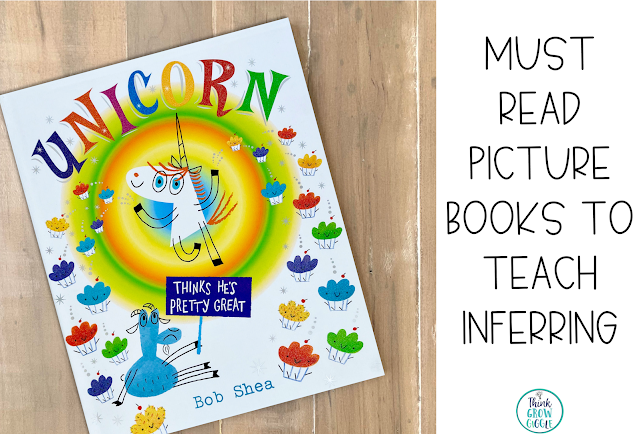
                     Unicorn Thinks He's Pretty Great written by Bob Shea


This is a great text to use when looking at self-esteem and individual strengths and weaknesses. This book is nothing short of awesome. Unicorn Thinks He’s Pretty Great is told through the eyes of Goat, an envious and bitter companion of the Oh-So-Great Unicorn. Except, what happens when Unicorn doesn’t think he’s actually all that great after all? Inferring the emotions the characters feel about themselves and each other will lead to some awesome class conversations about their own strengths and weaknesses. 


Being able to make inferences is one of many reading strategies that students must master in order to understand the increasing complex stories they read as upper elementary students. Be sure to take your time reading each book, collect information that helps students make inferences, and model yourself how you infer as you read these books! 


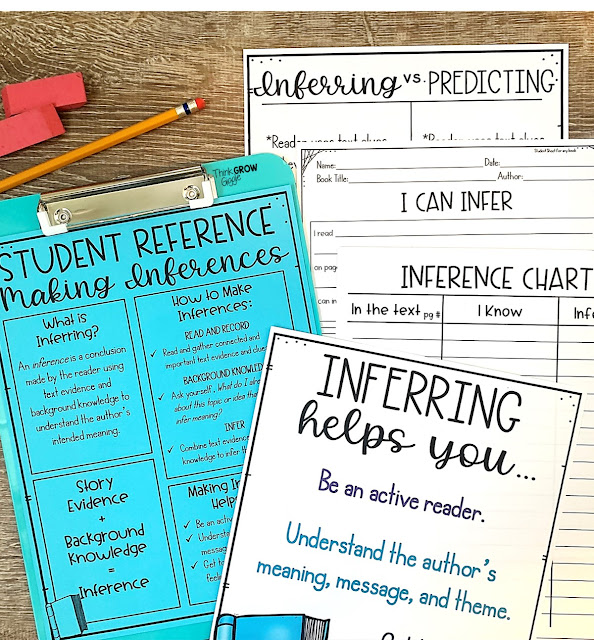
Try this inference activity that always helps my students become active readers who infer as they read!


Grab FREE inference activities to use with one of the books in this blog post below!


You would also love to read:


Looking for more inferring activities to help students succeed? See more HERE.


                    LOVE these ideas? Pin to save!


*affiliate links: “Think Grow Giggle is a participant in the Amazon Services LLC Associates Program, an affiliate advertising program designed to provide a means for sites to earn advertising fees by advertising and linking to Amazon.” (source: Section 5)


signature
Back to Top