Showing posts with label making inferences. Show all posts

Using Reading Strategies to Help Readers Grow

Reading strategy activities for 3rd 4th 5th graders


Do you want to help your students grow as readers and truly understand what they read as independent readers? That is always my goal each year, too!

That is why I focus on reading strategy instruction.

Reading strategies and reading units are quite different. 

Often times the teaching of reading strategies gets lost in the mix of teaching reading units. While teaching reading units such as character development are important, I have found that explicitly teaching students how to apply reading comprehension strategies to be the most effective tool to  help students grow as independent and self-monitoring readers.

Reading strategy instruction can be overwhelming at first to plan and implement, but it is important to teach students how to use reading strategies they read independently. It exposes students to multiple techniques to help them truly comprehend the text at hand. 

When students apply a variety of reading strategies as they read, it helps them become active readers. When students are active readers and apply multiple strategies as they read, they are able to understand the text at a deeper level. 

By teaching reading strategies with explicit instruction, you will help your students:
  • see reading strategies in action multiple times
  • learn how to apply them to their own independent reading
  • have the opportunity to practice the strategy in isolation
  • build their reading strategy repertoire 
  • learn how to apply more than one reading strategy when reading complex texts
  • understand the books that they read at a deeper level

Not sure how to get started?

I can help!

I have compiled tried and true teaching strategy resources that I use with my own students into convenient print-and-go packs to make planning, teaching, and practicing easier!


Each reading strategy pack includes:

  • anchor charts
  • graphic organizers to scaffold instruction
  • student practice pages
  • task cards and reading passages
  • independent reading tasks
  • many sets have modeled examples
  • and so much more in both print and digital formats


Which reading strategy set will you use today?


reading strategy activities for 3rd 4th 5th graes

Take a closer look at each reading strategy set by clicking the images below.


making predictions activities for upper elementary kids


"I have now purchased a few of these reading strategies from this seller and have been very happy with the package and how it is so easy to use in my classroom. I really appreciated the read aloud suggestions - I love using story books in class, they still love to be read to!"
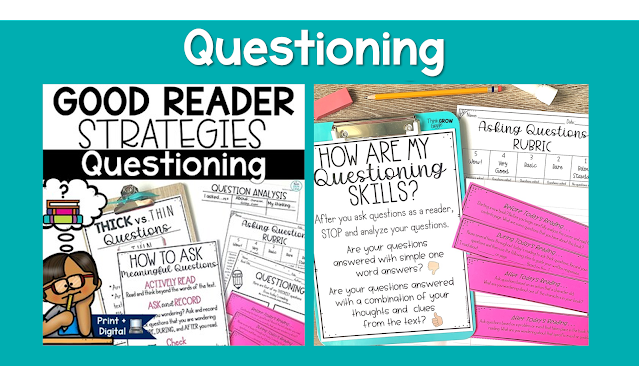

questioning activities for kids


"This was a great resource for my questioning unit. Very thorough and well laid out. The graphic organizers were great for independent practice. Thank you!"


making inferences activities for kids


"This resource was awesome! I couldn't believe all that was included. It has everything you need to teach inferencing in a simple and inviting format. The practice activities are great!"


summarizing activities for 3rd 4th 5th graders


"Wow, I had to reteach this strategy {summarizing} and using your product has made a great difference in my students' success. I reduced the size your poster for summarizing and the summary vs retell and taped them to my students' desk.
Love IT!!"


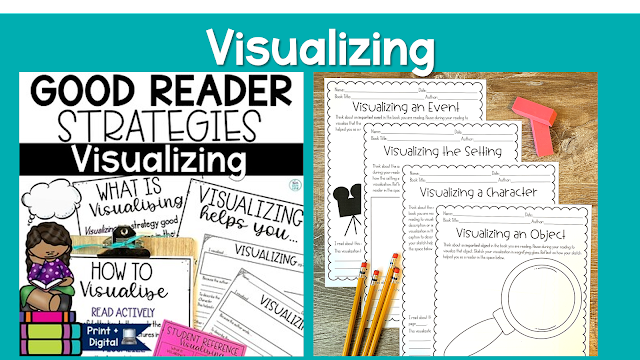
visualizing activities for kids


"Very helpful tool for teaching envisioning during reader's workshop. Great scaffolded worksheets for written responses."
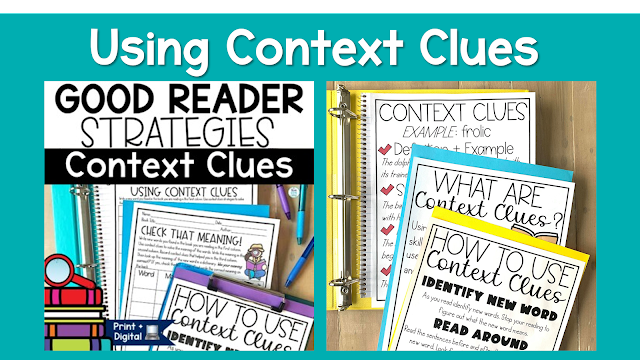
context clues activities for kids


"I love all of your products. They are easy to use and implement in the classroom. I use them in reader's notebooks and in small groups with my students. Thank you."
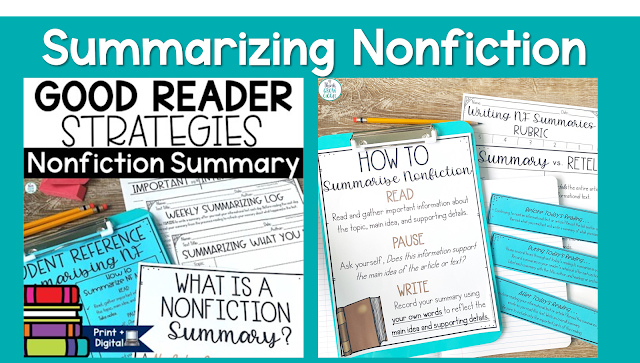

nonfiction summary activities for kids


"You have literally thought of every activity to help kiddos understand summarizing in both fiction and non-fiction. This resource is gold! Can’t wait to use it with my students this upcoming year! Thank you."
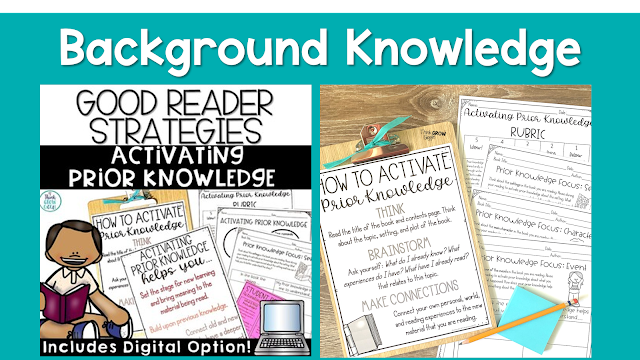

background knowledge activities for kids
"Extremely satisfied! I have a lot of English language learners and this is very helpful to them as well as an excellent review to the class as a whole. Thank you."

reading strategy activities for kids

Using Reading Strategies to Help Readers Grow


LOVE these reading strategy sets?
Be on the lookout for new sets being posted here!


Using Reading Strategies to Help Readers Grow


signature

7 Must Read Picture Books for Teaching Inferring in Upper Elementary Classroom


There is nothing more fun and engaging for upper elementary students than making inferences! Playing charades, solving mysteries, and reading books that require inferring are always some of my go to ways to introduce inferring with upper elementary students. 


How else do I love to introduce and practice inferring with my students? Using picture books of course! There are so many picture books that are perfect to help students focus on the skill of inferring by asking questions and collecting evidence to help them infer and truly understand the story and the author's message. 


Below is a list of MUST use mentor texts that upper elementary students love that requires that the readers make inferences to truly understand the story.


Knots on a Counting Rope written by Bill Martin Jr.


This touching story about a young boy who loves to hear the story about the night he was born, requires students to make inferences as they read, trying to discover what exactly makes this boy special. Through your questioning and evidence collection that you do with your student as you read this book, students will make inferences that help them discover that the young boy is blind. This is a story that makes a great mentor text for questioning, inferring, summarizing, character analysis, theme, and so much more! You will want to revisit and reread this book again and again for many different lessons!


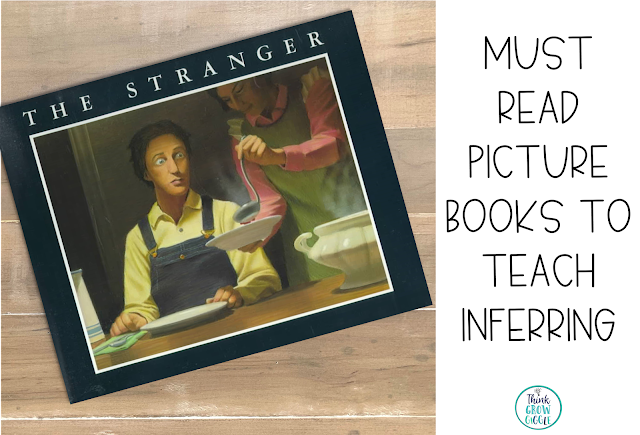
The Stranger written by Chris Van Allsburg


On a drive one night, a family accidentally hits a man with their car. The family loads him up and brings him home to be checked by the family doctor.  The students have to think about who the man is given all the things in the story that make the man “strange”. He cannot talk, animals flock to him, and he seems confused by very common and simple items. Through class discussion and context clues, see if you can infer who thisnameless man is! Grab some no-prep materials to go along with the story here! 


The Wretched Stone written by Chris Van Allsburg


Hands down, my favorite book by favorite author, The Wretched Stone provides so many opportunities for students to infer and figure out just what the stone really is! This book is not just great for learninghow to make inferences, but also as a springboard for important topics such as being involved in the arts and limiting screen time! Chris Van Allsburg is a pure genius!


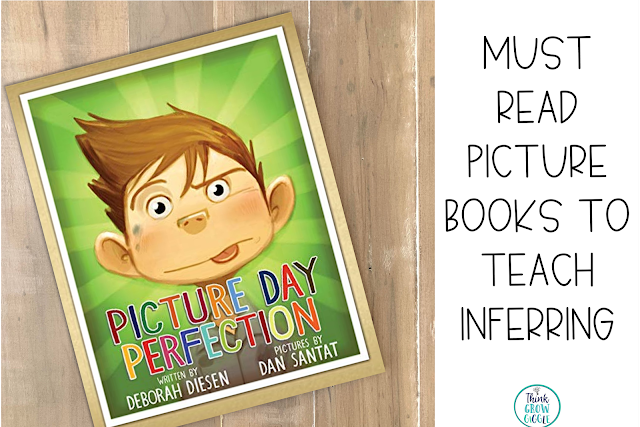
Picture Day Perfection written by Deborah Diesen  


We all have that picture day story we love to tell, but this one takes the cake! Syrup in his hair, a bench as cold and hard as an iceberg, and a late start to the day are going to make for a picture this student will never forget. Follow him on his journey to get the “perfect picture”... and see if your upper elementary students can infer what his true intentions were all along!


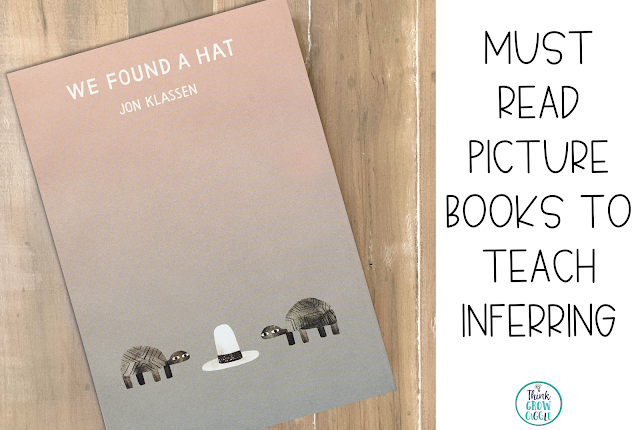
We Found a Hat written by Jon Klassen


When there is only one hat, but two heads… what is this duo to do?! In this great mentor text, explore inferring feelings, while also examining what friendship means. How do the turtles feel about what they want individually, and how do they feel about each other? The book is a very simple text, with minimal words but great illustrations. Teachers, brace yourselves because this one can lead to some very touching conversations about sacrifice for self and love of others.


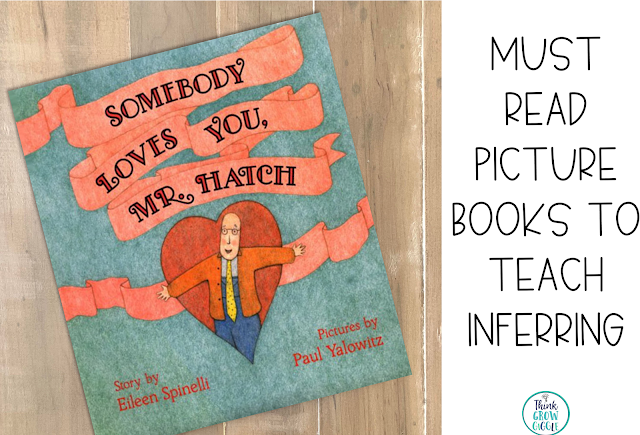
Somebody Loves you, Mr. Hatch written by Eileen Spinelli


You do not have to wait until Valentine's Day to read this classic! When a man who keeps to himself gets a mysterious package, his whole demeanor changes. Mr. Hatch, a loner of a man who keeps to a strict routine receives an anonymous package with a simple note; “somebody loves you”. Those three words change his entire attitude and routine. This mentor text can be used to look at simple human needs. What does feeling love mean to a person, and how can it change them for the better? How does Mr. Hatch spend his days before and after he thinks he is loved, and what can one infer that means about himself? All of these questions that readers ask themselves must be inferred! Don’t forget to wrap this activity up by sharing love around your classroom!


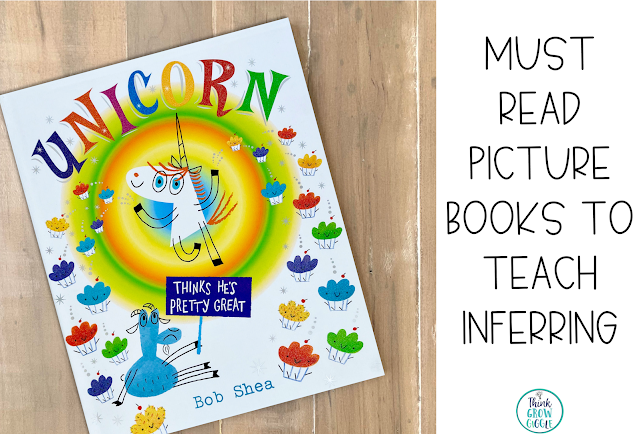
                     Unicorn Thinks He's Pretty Great written by Bob Shea


This is a great text to use when looking at self-esteem and individual strengths and weaknesses. This book is nothing short of awesome. Unicorn Thinks He’s Pretty Great is told through the eyes of Goat, an envious and bitter companion of the Oh-So-Great Unicorn. Except, what happens when Unicorn doesn’t think he’s actually all that great after all? Inferring the emotions the characters feel about themselves and each other will lead to some awesome class conversations about their own strengths and weaknesses. 


Being able to make inferences is one of many reading strategies that students must master in order to understand the increasing complex stories they read as upper elementary students. Be sure to take your time reading each book, collect information that helps students make inferences, and model yourself how you infer as you read these books! 


Try this inference activity that always helps my students become active readers who infer as they read!


Grab FREE inference activities to use with one of the books in this blog post below!


You would also love to read:


Looking for more inferring activities to help students succeed? See more HERE.


                    LOVE these ideas? Pin to save!


*affiliate links: “Think Grow Giggle is a participant in the Amazon Services LLC Associates Program, an affiliate advertising program designed to provide a means for sites to earn advertising fees by advertising and linking to Amazon.” (source: Section 5)


signature

Making Inferences Teaching Idea for Upper Elementary Students

inference activity for upper elementary

When it comes to reading strategies, making inferences is one that students must master in order to dive deep into other reading units such as understanding characters, questioning, and themes. Inferring is the groundwork for developing readers. It propels them forward as readers, giving them the skills that they need to dive deeper into texts and understand more challenging concepts such as symbolism and foreshadowing.

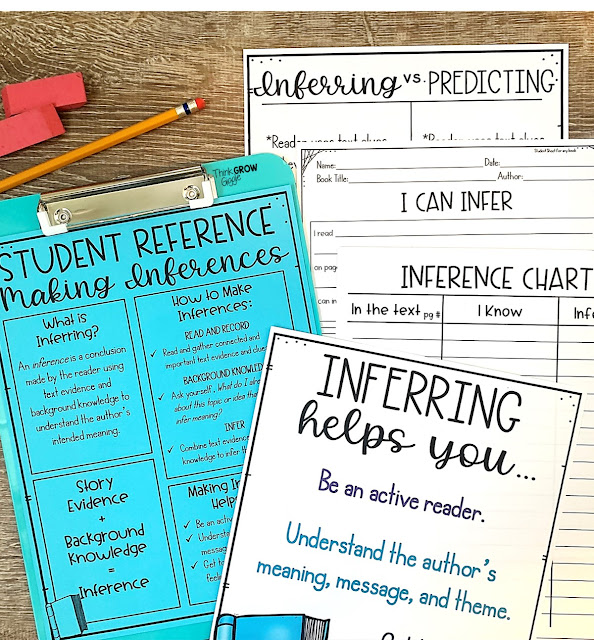
So what is an inference? An inference is a conclusion made by the reader using text evidence and background knowledge to understand the author’s intended meaning. 

Making inferences is no easy task. It requires careful reading work from the reader including collecting important text support and evidence. So how can we make sure that students are inferring, and inferring successfully, too? By taking a step by step approach, using concrete examples, teaching student monitoring and self-reflection strategies, and providing ample opportunities to practice inferring students will not only understand how to successfully infer, but will become more engaged readers, inferring on each and every page as they read.

When it is time to begin our inference unit, I always begin with this easy to implement lesson that always gets my students hooked on making inferences! All of your students, including struggling readers, will be engaged and understand the concept of inferring immediately! Follow these steps and your students will become experts in making inferences, in no time. (Grab resources for this lesson for FREE at the bottom of this post.)


1. Setting the Stage to Infer

I love to kick off inferring in my classroom with an introduction activity that provides a concrete visual of how to make an inference. This inferring activity is based on the book, The Wretched Stone by Chris Van Allsburg. Before a read aloud of this book, I go over two important concepts I want the students to remember, first is what I call the making an inference secret equation and second is the 3 steps of inferring that I teach my students to use as readers to help them to make an inference.


Grab the free printables that go along with this lesson!

Making an Inference Secret Equation

When it comes to making an inference, I tell my students that they cannot
infer without using the secret equation. This secret equation is a visual reminder of how to infer. Using the yellow + blue = green concept, students are able to remember that in order to infer, they need to use story evidence (yellow) and background knowledge (blue) to make an inference (green).


making inferences activity for upper elementary kids

3 Steps of Inferring  

After we go over this secret formula, we go over the following simple steps that readers do when making inferences:

Ask What You Already Know: Ask yourself what you already know about what you are reading that can help you to make an inference.
     Ask "Thick" Why Questions: Ask thick questions as you read to make inferences about what is happening in the text. Ask “why” questions to help you infer. Avoid asking questions with one-word answers.
Answer The Questions You Asked: Collect story evidence to answer the questions you asked as a reader. Now infer.

A Simple Way to Teach Students to Make Meaningful Inferences

Note: This lesson is taught after I teach questioning so students are fully aware of the differences between thick and thin questioning.

2. Get Students Hooked

Once I have gone over the secret formula and the three steps, I engage the students to infer even more before our read aloud. Here is how:

  • I take out three empty cups, a jar of water, and food coloring. 
  • I enlist the help of students to pour water into two of the cups and add a few drops of yellow dye into one cup of water to represent the story evidence we will be collecting during our read aloud. 
  • Another student will add a few drops of blue dye in the second cup of water to represent the background knowledge that will help make an inference.

One of the three cups is left empty. This cup is empty because we have not yet made our inference. By the close of the read aloud, we will combine all of the story evidence yellow water and what we already know blue water and form an inference we will have a cup of green water, and voila…an inference is made!


A Simple Way to Teach Students to Make Meaningful Inferences

Time to hook the readers with a read-aloud of the Wretched Stone! 

If you have not 
read the book, The Wretched Stone by Chris Van Allsburg, it is centered around a large rock that is found on a mysterious island and negatively changes the ship’s crew that brought it aboard. Spoiler alert, the stone is a TV. During the read-aloud of The Wretched Stone, we stop periodically to ask thick questions and record story clues and evidence, along with our background knowledge on a T-Chart to help us infer what the wretched stone could be.

making inferences activity for kids

The students are usually stumped about what the wretched stone could be
throughout 
the reading. Following the reading, we review all of our clues and all of our background knowledge from the chart and it becomes clear what the stone really is. I emphasize to the students that the more clues and background knowledge that we have, the easier it will be for us to infer. 

At this point, the student who correctly infers that the stone is a TV, comes up 
and combines the yellow and blue water into the empty cup, and we have a cup of green water representing the inference made by using story clues and background knowledge. 


making inferences graphic organizer

A Simple Way to Teach Students to Make Meaningful Inferences


This lesson is a great concrete visual for the students to remember what an inference is and how to make an inference, too. It also shows how making an inference truly helps you to understand the author’s theme and message. This inferring lesson is one that students never forget, making it perfect to refer back to as students continue to practice inferring throughout the year! (grab resources for this lesson for FREE at the bottom of this post.)


A Simple Way to Teach Students to Make Meaningful Inferences


3. Teach Students to Self-monitor

Making inferences is a tricky concept and requires many lessons and activities. Students must learn how to reflect and self monitor the inferences that they are making. As students read longer and more complex texts, students’ inferences will need to be adjusted as they collect more story clues and evidence. Using a continuum style self-monitoring chart, students can see how they are growing as readers on the path to making powerful inferences to help them understand the stories they read more deeply. I have a chart size poster of this continuum in class and students keep a copy in their reading notebooks so that it can be easily referred to all year long! This is a great tool to refer to during your reading workshop one on one student conference to help guide your discussion. 

4. Practice, Practice, Practice!

making inferences quotes for teachers marzanoWhen it comes to making
inferences, continual practice is a must! In my classroom, we practice making inferences in isolation with short text and inaction while independently reading. Using task cards, short texts, and picture books, students can work together to practice making inferences. Once students are able to successfully make inferences in isolation, we transition to making inferences before, during, and after we read. Graphic organizers, note sheets and sticky organizers are all ways that students can record text evidence that helped them to make inferences.

Making inferences is hard, but rewarding work. It is a skill that must be 
explicitly taught and practiced continuously.  

Being able to successfully make inferences while reading is a foundational skill that students need in order to go beyond the basic comprehension of a book.

It allows them to understand the author’s meaning, compare themes, and fully grasp complex character development. By inferring as they read, students become active readers and begin to fill in the blanks, really searching for the author’s message and information that was not directly given to them in written words.


Looking for more inference book activities? Try these!


LOVE these ideas? Pin to save!


making inferences activities and strategies for kids


*affiliate links: “Think Grow Giggle is a participant in the Amazon Services LLC Associates Program, an affiliate advertising program designed to provide a means for sites to earn advertising fees by advertising and linking to Amazon.” (source: Section 5)

93


signature
Back to Top