Showing posts with label Freebie. Show all posts

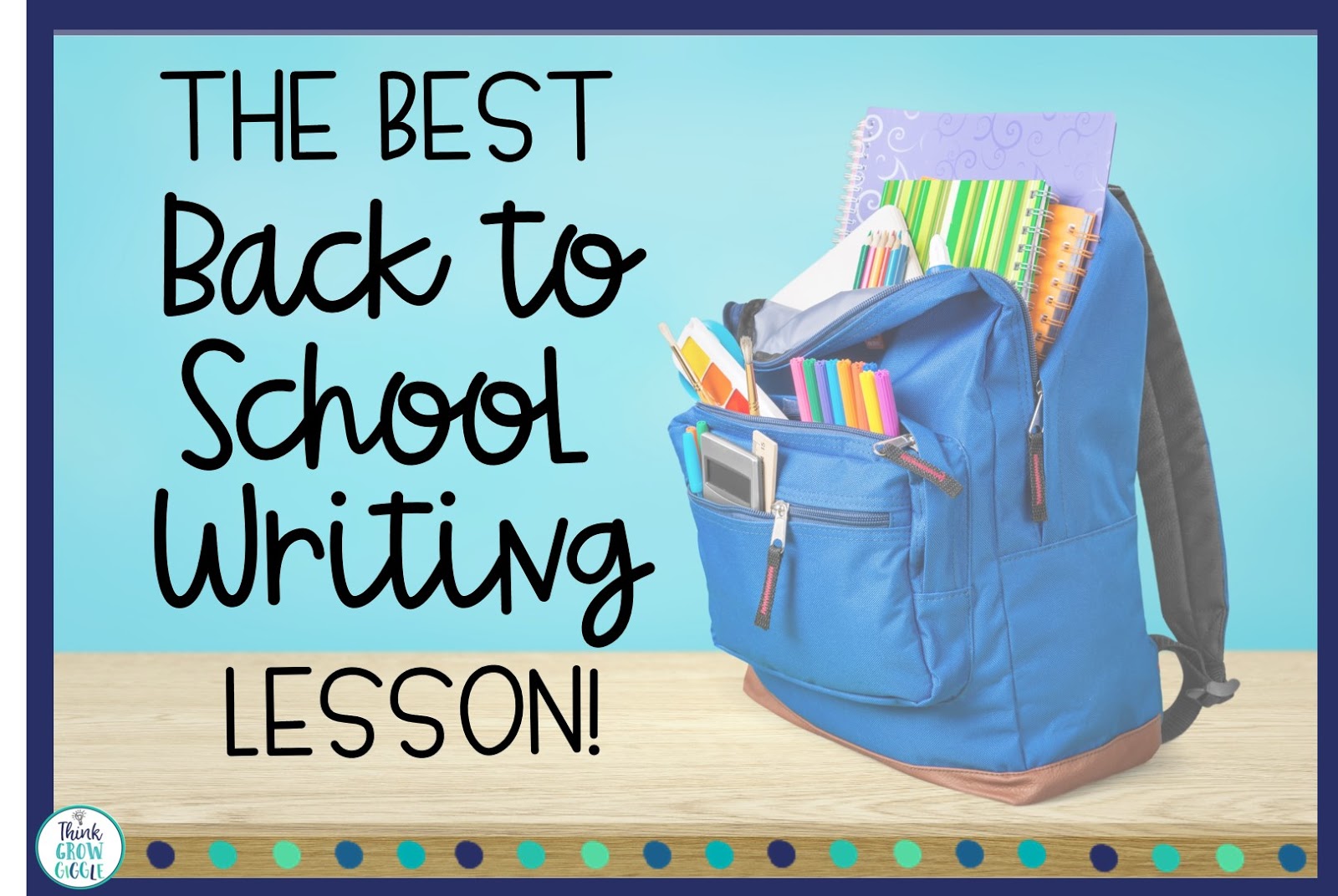
The Best Back to School Writing Activity


writing lesson for the first week of school


Back to school time can be stressful, but your very first writing lesson of the year does not have to be! This simple, yet meaningful activity is an engaging and informative way to kick off your back to school season and get to know your students as writers right from the first day of school.

I love using this writing lesson at the start of every school year because this lesson offers so many benefits! After many years of teaching and tweaking this activity, it I have found this lesson to be:

  • engaging
  • motivating
  • inspirational to students as writers
  • and creates a one of a kind back to school bulletin board

This lesson also helps you to get to know your students as writers, build rapport, and positive relationships with students all while getting to know their writing strengths and areas for improvement. All of which will help you during your very first writing conference of the year.

You will love it and all its benefits, too!

Want to give it a try? Read the steps for teaching this lesson and then grab the lesson printables for FREE at the bottom of this post.


Step 1: The Read-Aloud


The Best Back to School Writing Activity


Begin with a blank anchor chart with the header, What do good writers do? Then read the story Rocket Writes a Story by Tad Hills. Instruct students to be listening for strategies that good writers do during the read-aloud of the book. After reading the book, but before discussing it as a class, have students complete reader reflection questions. When they are done, discuss each question and writing strategy that they wrote about together as a class.


Step 2: Brainstorm


what do good writers do anchor chart


Following a reading of the book, have students work in pairs, small groups, or independently to brainstorm strategies and techniques that good writers use. Have students record their ideas on the recording sheet and be ready to share.


Step 3: Complete the Class Anchor Chart


The Best Back to School Writing Activity


Now your students are ready to share strategies that good writers use. Record student ideas on the class anchor chart. If your students need guidance, you can use the pre-written anchor chart ideas included in the free lesson set at the bottom of the post. Use the premade list to guide student discourse so that students can generate these ideas on their own. Display your completed anchor chart in the classroom.


Step 4: I am an Author!


The Best Back to School Writing Activity


Now comes the creativity! Have students illustrate themselves as authors! This is such an empowering activity for students to not only complete but to see hanging on their classroom bulletin board. Students should create colorful drawings of themselves writing. As they draw help them by asking them:

  • What tools do they need as authors? 
  • Where are they as they write? 
  • What are they writing about? 
  • Which writing genre are they writing? 
  • How do they feel as they write? 

These questions should be answered through their illustrations. Have students label their illustration, too! This activity is perfect for your first writing bulletin board of the year or leave these illustrations up all year long. I display them on your writing bulletin board during the first month of school, and then I take them down and add them to my students' writing notebooks.

Step 5: Get Writing


upper elementary first day of school writing lesson


Once the first lesson is officially done and your students' author illustrations are hanging up, get them writing. I love offering students a choice of three prompts to write to during the first week of school. I give them a choice of three personal narrative prompts because that is our first writing unit we study.

For the first writing prompt of the year, I do not give students any directions. They just pick a prompt and write. These first writing pieces serve as valuable formative assessments for me as we begin our first writing unit. They also serve as a great comparison tool for students at the end of the year when they reflect on the growth that they have made as writers. Keep these first writing pieces safe so students can compare their first and last writing pieces. It is the best last day of school writing activity!

And that is it! These five steps will help you kick off your school year in an engaging way to get your students excited about writing this school year!

You will love teaching this lesson during the first few days of the school during each back to school season. It will not only engage your students but it will motivate them, too. Through these activities, you will gain valuable information about each one of your new students as writers that will help to help guide instruction during your first unit of writing.

Need more specific writing tips and lesson ideas? Read these blog posts:


Grab this lesson for free below!


Love this writing lesson idea? 

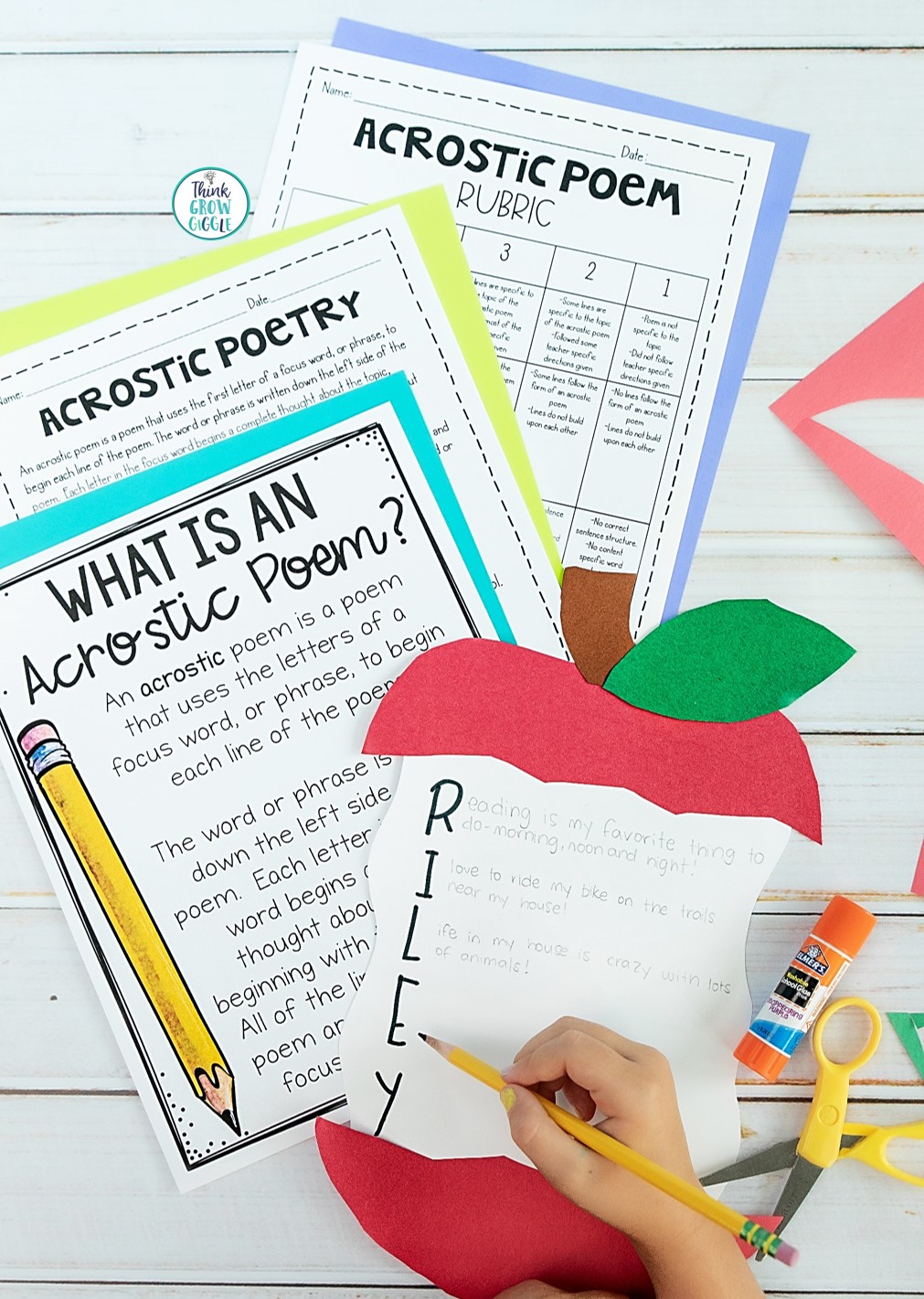
Then you will love this back to school poetry writing activity!


LOVE these ideas? Pin to save for later!


upper elementary writing first week of school free


139


signature

Using Kindness Quotes in the Classroom to Promote Change

how to create a kind classroom


Having a truly kind classroom is much harder than it seems. While we all want to have a classroom filled with random acts of kindness and witness kind behavior on a daily basis, it is not something that usually just happens. It takes a lot of encouragement, planning, teaching, modeling, and consistency to create a classroom that oozes with kindness.

Teaching kindness takes time, and as classroom teachers, we know that our time is always at a premium.

That is why I work hard to make sure that I am constantly weaving kindness quotes into our classroom routine. When kindness is a part of your classroom culture, it becomes a natural part of the day; not something extra that you have to fit in.

Here are three quick and easy ways to use kindness quotes in your classroom to promote change and encourage goodwill in your classroom.


Morning Meeting Time

Using Kindness Quotes in the Classroom to Promote Change


I love using morning meetings as a time to discuss important concepts and ideas. The students are fresh, focused, and truly enjoy gathering together as a community. They feel empowered and know that their voices are heard when we are all together during this time. That is why it is the perfect time to use kindness quotes with your students.

Instead of sharing a new quote each day, we spend a great deal of time with just one quote a week. Here is a quick overview of how we spend an entire week digesting a single quote.
  • Monday: share the quote, hang it up, and let it sink in 
  • Tuesday: have a few students share what they think it means
  • Wednesday: have students discuss in pairs their interpretations of the quote
  • Thursday: have students share how they can apply the quote to their own lives
  • Friday: have students write about or illustrate what the quote means and how they can put it into practice-these are fun to display in your classroom


Those Awkward Five Minutes

Using Kindness Quotes in the Classroom to Promote Change


We all have those awkward five minutes that pop up or are just in our schedules. The five minutes between special and lunch, the five minutes after recess and before a guest teacher, the five minutes you have after you finish a lesson and before an assembly begins...they pop up everywhere.

Instead of wasting those five minutes, use them to your advantage. Use those five minutes to discuss kindness. Here is how!

  • have students share what a kindness quote you have displayed means to them
  • have students share how they can put a quote you have displayed into action
  • have students create their own kindness quotes to inspire others (grab the free kindness quote template for students to complete at the bottom of this post)
  • have students share random acts of kindness they witnessed in your classroom and school community
  • have students tell about kindness themes they have come across in the books that they read, podcasts they have listened to, or even a show or movie they have watched
  • read aloud or revisit favorite kindness picture books 


Display All the Quotes


Using Kindness Quotes in the Classroom to Promote Change


Displaying kindness quotes is a great way to have your students see influential words of positivity every day. When students see a bulletin board display or walk past a kindness poster in the cubby area, they read it. After time, the messages become a part of their routine and you will begin to hear students use the kindness quotes in their conversations with other kids. Whether they are reminding others how to act, sticking up for a friend, or just spreading positivity, the kindness quotes you display do make an impact on those that read them and see them each day.


Using Kindness Quotes in the Classroom to Promote Change


It is easy to weave kindness discussions throughout your day especially when you use kindness quotes to get the dialogue going! Want even more kindness classroom tips? Check out THIS POST with easy to implement kindness strategies you can start using today.


You may also like:


Love these ideas? Pin to save for later!


Using Kindness Quotes in the Classroom to Promote Change


48


signature

7 Poetry Activities for At Home and Classroom Learning

digital and distance learning activities elementar


One of my favorite things about April is that it is National Poetry Month! I love celebrating poetry all year long, but especially during April when we can spend even more time writing and reading poetry. In my classroom, we love to read classic poetry and new poetry, revisit with familiar and new poets, and of course, become poets ourselves, writing different forms of poetry all month long.


digital poetry activitiesI especially love having students write poems because they are engaging for all levels of writers, including struggling writers. Writing poetry can also be therapeutic, serving as an outlet for kids to express themselves in positive ways, especially during difficult times.


Whether you are in the classroom teaching, teaching remotely through distance learning, or a parent looking for easy to implement and engaging poetry activities to help celebrate National Poetry Month this list is for you.


These activities are engaging, fun, and require little to no resources. Read more about each activity below and grab a FREE printable list of these poetry activities HERE.

Go on a Rhyming Hunt!

Anything that gets kids up and moving around, whether they are at home learning or in the classroom, is a win in my book! Begin this activity by having students travel around their environment with a plain piece of paper on a clipboard. This can be done inside or outdoors. Accompany the kids on the hunt. As you travel around, stop the kids and ask them to observe their surroundings. Have a student share a word that they observed and then allow two minutes for students to record all the rhyming words that they know for that word.

For example, if students observe a tree, they spend the next two minutes thinking of all the words that rhyme with tree. When you are done with your rhyming hunt, have the kids use the list of words to write a poem. All of the words that they recorded now act as a brainstormed list, making poetry writing even simpler!

Use Song Lyrics

What better way to engage students than with music? Most times, a song becomes a favorite or is "catchy" because of the flow of the lyrics. Have your students think about their favorite song and analyze the lyrics. Ask them these three questions to get them analyzing:

  • Do they rhyme? 
  • What is the rhyming pattern? 
  • What makes that song's lyrics flow? 

Use any nursery rhyme or familiar song to model for students how to find the rhyming pattern and then let them analyze their favorites. Take it a step further and assign students a partner and have them compare and contrast the flow and rhyming pattern of both of their favorite songs.

Lessons Made Easy with Videos And Websites

If you are looking to integrate technology into poetry writing activities, these websites offer great introductory lessons and activities for teaching kids about poetry.
7 Poetry Activities for At Home and Classroom Learning

  • BrainPop JR Visit Brainpop Jr. (these videos are appropriate for grades 1-3) and sign up for a free account to access these three videos to get your students excited about poetry writing. Simply search for Rhyming Words, Poems, and Writing with the Senses
  • BrainPop Visit Brainpop (these videos are appropriate for grades 4 and up) and sign up for a free account to access these three videos to get your students excited about poetry writing. Simply search for Poetry, Similes, and Metaphors, Maya Angelou
  • Storyline Online I can't rave about this site enough! I have used it for years with my students and they love it each year. This is a completely FREE site. Have your kids listen to a read-aloud of the book Clark the Shark which is filled with rhyming words. Go a step further and have the kids record the rhyming words that they hear in the book and then write their own poem using those words.

Who is Your Favorite Poet?

To this day, I still remember being a third grader myself and studying the poetry works of Shel Silverstein. I even had to memorize one of his poems and recite it to the class. I still have that poem memorized, it was the poem, Nobody. I loved it then and still love it today.

Poet studies truly immerse students in poetry and leave an impact on kids as readers and writers. I love teaching my students about the poets behind their favorite poems. You can assign a poet for students to research or allow them to write a biography report on any poet of their choice.

Some favorite poets to get you started are Shel Silverstein, Jack Prelutsky, Roald Dahl, and A.A. Milne.


Create a Digital Poetree Bulletin Board


7 Poetry Activities for At Home and Classroom Learning


I have a poet-tree bulletin board up all year long in my classroom. It is a spot to display our monthly poetry writing. The kids not only look forward to writing different forms of poetry each month and displaying it on the tree, but they also love to read and hear the poems of their classmates. Creating a digital bulletin board can be a little bit of work for the teacher, but it is a great way to display student poetry writing and share it with students. Grab my digital Poetree Bulletin Board activity for FREE at the bottom of this post and give it a try! The download includes all the necessary Google Classroom directions. Be sure to have Google Classroom to be able to do this activity with your students.

Acrostic Poetry with Any Item or Book

acrostic poetry activities for distance at home learningI love assigning acrostic poetry writing for my students for many reasons, but mostly because writing an acrostic poem can range from simple to challenging depending on your directions. If your students are home because of distance learning, have them try one of these two acrostic poetry activities:

  1. Have students write an acrostic poem about their favorite thing in their homes. It can be a toy, game, pet, or family members.
  2. Have students write an acrostic poem about a character in a book they are reading at home, or assign them to watch a story via Storyline Online, like Enemy Pie, and write an acrostic poem describing a character from the book.

This list of Acrostic Poem Lesson Ideas will also help you challenge students with acrostic poetry.

Write a Poem

If you are not with your students, you can still assign them a poetry writing activity. These three poetry writing activities are perfect for students to complete on their own as they require very little support.
  1. Write a Free Verse Poem: This type of poem does not follow any rules. It allows students to write their thoughts and feelings in form of natural speech. You can assign students a topic or let them choose. Without any specific pattern rules students will have a chance to just write!
  2. Pick a Color, Any Color: Color poetry is a fun form of poetry that students can write about for any topic at all. A color poem is a poem that uses one specific color to convey the mood the poet is trying to express. One type of color poem is written with the five senses about one specific color. Here is an example of a color poem that I wrote as a model for my students all about the color green:

    Green is grass kissed by the morning dew.
    Green means heavy coats away and light jackets come out to play.
    Green is children as happy as a puppy to play outside.
    Green is buzzing bees moving like racecars from flower to flower.
    Green signals warmer days are here.
    Green equals spring. 

    Encourage your students to pick an item, focus on its color, and then use their five senses to get the mood they are feeling about the color into poetic form.
  3. Write About Yourself with a Bio Poem: What better thing to have students write a poem about than themselves? Bio poems are filled with emotions and personal thoughts. They allow the poet to express themselves through writing. While this form of poetry does follow a specific pattern, the sentence starters of this form of poetry give students clear direction on how and what to write. 


I hope these poetry activities give you some direction and many ideas on how you can celebrate poetry all year long, with an even bigger focus during April. Don't let remote teaching and distance learning stop you from celebrating National Poetry Month with your students. Poetry writing at home can be fun and engaging for your students with these easy-to-implement ideas. Be sure to grab this free resource to help encourage different forms of writing at home, too!


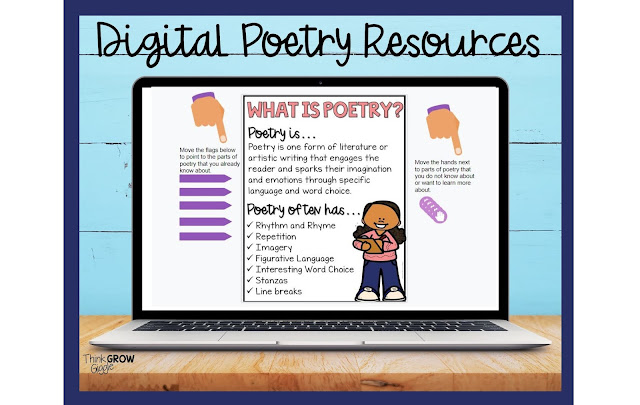
Looking for digital resources for direct lessons on poetry? 
Click HERE.


at home and distance learning poetry ideas


Love these ideas? Pin for later!


poetry at home distance and digital learning Google Classroom


243


signature

4 Quick Tips for Using Exit Slips in the Classroom

exit slips in upper elementary and middle school classrooms

There sure was a learning curve the year I was moved from teaching third graders in a self-contained setting, to teaching math and science to different groups of fifth-graders. I had to learn how to manage older students, who switched classes and were only with me for a set amount of minutes each day. Gone were the days where I had one group of students all day long, allowing me to catch up with each child at different points throughout the day. I knew that since my time was limited with each class, I had to make the most of every moment. 

I began to implement exit slips to help me get a pulse of student understanding after the day's lessons. Not only did the use of exit slips help me to grasp student understanding, but it also provided students with the opportunity to reflect on their own understanding of the objectives taught, holding them accountable for their own learning.

Here are some helpful tips to use when implementing the exit slips in your classroom.

Teach Your Expectations

holding students accountable for learning
Teach your students how to fill out an exit slip when you teach all of your classroom expectations at the beginning of the year. Like any other strategy, you implement in your classroom, completing an exit slip must be explicitly taught. I use four levels of understanding for my exit slips. At the start of the year, we go over each level, what it means, and how students can tell what level of understanding they are at after each lesson. I have the four levels hanging up in my classroom, as well as a small sign next to the exit slip basket. On each exit slip, I expect students to write the topic or objective of the lesson, what level of understanding they are at, and to give a reason or example that proves they are at that level. Sometimes I will write a problem or pose a question and have them complete it on their exit slips. Other times they just express their understanding using their own words. Grab this "levels of understanding" printable for free at the bottom of this post.


Keep It Simple and Use Consistently

The exit slips that I use are open-ended. This is helpful for both the students and myself for many reasons:

  • Students always know how to complete the exit slips.
  • They can be used for any subject and any topic.
  • I only make copies of one type of exit slip and always have them on hand.
  • Exit slips can still be used when a substitute is in the classroom.
By using the same exit slips consistently, students understand how to complete them, improve on their reflections skills, and become accountable for their own learning.

Ditch the Names

My classroom runs on student numbers! My homework bins, cubbies, notebooks, everything is labeled with classroom numbers, so our exit slips are no different. I have students use their classroom numbers instead of names so that they feel more comfortable sharing their true understanding of the lesson on the exit slips. At the beginning of the year, we talk all about growth mindset and not comparing your own learning to others' learning. As time goes on and students feel comfortable in our classroom community, they are able to complete the exit slips with honest reflections.

Use Colored Slips

One teacher hack that I have found to be helpful for using exit slips with multiple groups of students is to color code the exit slips. With two sections of fifth-grade math and science, I use white exit slips for one group of students and use Astrobrights colored copy paper for the second group of students. This helps me quickly sort the exit slips once they are collected, review them, and adjust my lessons for the next day. Grab the exit slips that I use for free at the bottom of this post.

There are so many benefits to using exit slips in the classroom. Exit slips are not just for classrooms that switch classes, but for any classroom. They are a simple way to connect with students, have evidence of student growth, address student's individual needs, and reflect on your own teaching.  

Looking for more ideas for holding students accountable for their learning? Check these out and grab the freebies along the way!


exit slips in upper elementary classroom


*affiliate links: “Think Grow Giggle is a participant in the Amazon Services LLC Associates Program, an affiliate advertising program designed to provide a means for sites to earn advertising fees by advertising and linking to Amazon.” (source: Section 5)


27


signature

Making Inferences Teaching Idea for Upper Elementary Students

inference activity for upper elementary

When it comes to reading strategies, making inferences is one that students must master in order to dive deep into other reading units such as understanding characters, questioning, and themesInferring is the groundwork for developing readers. It propels them forward as readers, giving them the skills that they need to dive deeper into texts and understand more challenging concepts such as symbolism and foreshadowing.

So what is an inference? An inference is a conclusion made by the reader using text evidence and background knowledge to understand the author’s intended meaning. 

Making inferences is no easy task. It requires careful reading work from the reader including collecting important text support and evidence. So how can we make sure that students are inferring, and inferring successfully, too? By taking a step by step approach, using concrete examples, teaching student monitoring and self-reflection strategies, and providing ample opportunities to practice inferring students will not only understand how to successfully infer, but will become more engaged readers, inferring on each and every page as they read.

When it is time to begin our inference unit, I always begin with this easy to implement lesson that always gets my students hooked on making inferences! All of your students, including struggling readers, will be engaged and understand the concept of inferring immediately! Follow these steps and your students will become experts in making inferences, in no time. (Grab resources for this lesson for FREE at the bottom of this post.)


1. Setting the Stage to Infer

I love to kick off inferring in my classroom with an introduction activity that provides a concrete visual of how to make an inference. This inferring activity is based on the book, The Wretched Stone by Chris Van Allsburg. Before a read aloud of this book, I go over two important concepts I want the students to remember, first is what I call the making an inference secret equation and second is the 3 steps of inferring that I teach my students to use as readers to help them to make an inference.


Grab the free printables that go along with this lesson!

Making an Inference Secret Equation

When it comes to making an inference, I tell my students that they cannot
infer without using the secret equation. This secret equation is a visual reminder of how to infer. Using the yellow + blue = green concept, students are able to remember that in order to infer, they need to use story evidence (yellow) and background knowledge (blue) to make an inference (green).


making inferences activity for upper elementary kids

3 Steps of Inferring  

After we go over this secret formula, we go over the following simple steps that readers do when making inferences:

Ask What You Already Know: Ask yourself what you already know about what you are reading that can help you to make an inference.
     Ask "Thick" Why Questions: Ask thick questions as you read to make inferences about what is happening in the text. Ask “why” questions to help you infer. Avoid asking questions with one-word answers.
Answer The Questions You Asked: Collect story evidence to answer the questions you asked as a reader. Now infer.

A Simple Way to Teach Students to Make Meaningful Inferences

Note: This lesson is taught after I teach questioning so students are fully aware of the differences between thick and thin questioning.

2. Get Students Hooked

Once I have gone over the secret formula and the three steps, I engage the students to infer even more before our read aloud. Here is how:

  • I take out three empty cups, a jar of water, and food coloring. 
  • I enlist the help of students to pour water into two of the cups and add a few drops of yellow dye into one cup of water to represent the story evidence we will be collecting during our read aloud. 
  • Another student will add a few drops of blue dye in the second cup of water to represent the background knowledge that will help make an inference.

One of the three cups is left empty. This cup is empty because we have not yet made our inference. By the close of the read aloud, we will combine all of the story evidence yellow water and what we already know blue water and form an inference we will have a cup of green water, and voila…an inference is made!


A Simple Way to Teach Students to Make Meaningful Inferences

Time to hook the readers with a read-aloud of the Wretched Stone

If you have not 
read the book, The Wretched Stone by Chris Van Allsburg, it is centered around a large rock that is found on a mysterious island and negatively changes the ship’s crew that brought it aboard. Spoiler alert, the stone is a TV. During the read-aloud of The Wretched Stone, we stop periodically to ask thick questions and record story clues and evidence, along with our background knowledge on a T-Chart to help us infer what the wretched stone could be.

making inferences activity for kids

The students are usually stumped about what the wretched stone could be
throughout 
the reading. Following the reading, we review all of our clues and all of our background knowledge from the chart and it becomes clear what the stone really is. I emphasize to the students that the more clues and background knowledge that we have, the easier it will be for us to infer. 

At this point, the student who correctly infers that the stone is a TV, comes up 
and combines the yellow and blue water into the empty cup, and we have a cup of green water representing the inference made by using story clues and background knowledge. 


making inferences graphic organizer

A Simple Way to Teach Students to Make Meaningful Inferences


This lesson is a great concrete visual for the students to remember what an inference is and how to make an inference, too. It also shows how making an inference truly helps you to understand the author’s theme and message. This inferring lesson is one that students never forget, making it perfect to refer back to as students continue to practice inferring throughout the year! (grab resources for this lesson for FREE at the bottom of this post.)


A Simple Way to Teach Students to Make Meaningful Inferences


3. Teach Students to Self-monitor

Making inferences is a tricky concept and requires many lessons and activities. Students must learn how to reflect and self monitor the inferences that they are making. As students read longer and more complex texts, students’ inferences will need to be adjusted as they collect more story clues and evidence. Using a continuum style self-monitoring chart, students can see how they are growing as readers on the path to making powerful inferences to help them understand the stories they read more deeply. I have a chart size poster of this continuum in class and students keep a copy in their reading notebooks so that it can be easily referred to all year long! This is a great tool to refer to during your reading workshop one on one student conference to help guide your discussion. 
4. Practice, Practice, Practice!

making inferences quotes for teachers marzanoWhen it comes to making
inferences, continual practice is a must! In my classroom, we practice making inferences in isolation with short text and inaction while independently reading. Using task cards, short texts, and picture books, students can work together to practice making inferences. Once students are able to successfully make inferences in isolation, we transition to making inferences before, during, and after we read. Graphic organizers, note sheets and sticky organizers are all ways that students can record text evidence that helped them to make inferences.

Making inferences is hard, but rewarding work. It is a skill that must be 
explicitly taught and practiced continuously.  

Being able to successfully make inferences while reading is a foundational skill that students need in order to go beyond the basic comprehension of a book.

It allows them to understand the author’s meaning, compare themes, and fully grasp complex character development. By inferring as they read, students become active readers and begin to fill in the blanks, really searching for the author’s message and information that was not directly given to them in written words.


Looking for more inference book activities? Try these!


LOVE these ideas? Pin to save!


making inferences activities and strategies for kids


*affiliate links: “Think Grow Giggle is a participant in the Amazon Services LLC Associates Program, an affiliate advertising program designed to provide a means for sites to earn advertising fees by advertising and linking to Amazon.” (source: Section 5)

93


signature

3 Easy to Implement Tips to Teach Procedural Writing

how to writing lessons


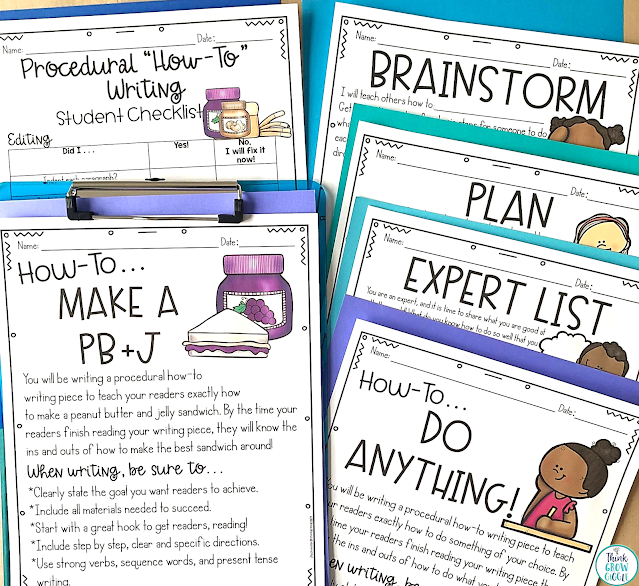
Having my students write procedural pieces is one of my favorite units to teach! The kids are always excited to share how to do something that they are good at, that they enjoy, or something that they just learned. Writing a piece about How to Catch a Leprechaun is always one of their favorites!


I love practicing how to writing with seasonal procedural writing projects like March-themed writing about How to Catch a Leprechaun which are fun, creative, and always high engagement for students. But before we practice with seasonal topics, I stick to formal writing workshop time to teach lessons that are designed to help students truly grasp the concept of how-to writing.


Here is how I break down this genre of writing for my upper elementary students in focused lessons to help them understand the nuances specific to this writing genre. These tips are perfect for any procedural writing lesson throughout the year.


3 Easy to Implement Tips to Teach Procedural Writing
Students are expected to write to narrative, expository, and opinion prompts. So when students find out that procedural writing is a form of expository writing, they can instantly connect to this genre and use what they know about expository writing to write procedural writing pieces.

Although procedural writing is a form of expository writing, students must understand that the purpose of procedural or “how-to” writing is to help someone succeed at doing something by following specific instructions. Students must teach the reader through their writing.

I love using picture books and modeled writing to help students see procedural writing in action! 


how to writing upper elementary


My favorite picture books to read as mentor texts for this unit include:


Another great way to show examples of procedural writing is to use modeled writing. By annotating modeled procedural writing together, students can see the elements of this writing genre in action and understand how to include these elements in their own writing pieces. 


3 Easy to Implement Tips to Teach Procedural Writing
All writing forms have patterns and structures specific to their genre. By explicitly teaching students the structure of procedural writing they will understand the key components. When introducing this form of writing, these are the three components I expect from students:
  • Introduction: Hook your reader, introduce the topic, and state what materials are needed to complete the task 
  • Support Ideas: Include detailed and sequential steps, strong action words, and illustrations to support the topic
  • Conclusion: Restate what you taught the readers to do.
Once I have gone over the structure of procedural writing, we revisit the picture books that were read to kick off the unit and identify these three components. As we gather them, we record them in graphic organizers. This helps students to see the evidence from the books but also teaches them how to use the graphic organizer when they head out to write their pieces. 

Students love using keywords to help move their writing pieces along. “How-To” pieces use temporal words (first, next, then, last) and strong verbs to explain how to do something. This is why we brainstorm a big list so that students have a word bank to select from when they are writing. Then we revisit the picture books to collect even more procedural writing keywords.

Grab the free procedural writing student guide right here!


how to writing activities
What makes procedural writing so engaging for students is that it gives them the opportunity to shine through writing pieces that highlight what they are good at, truly celebrating themselves! I have found that students love to pick topics that they know a lot about, like playing a game or sport or how to make their favorite snack. Be sure to also provide students with opportunities to write to topics that you select to challenge their writing skills even further.

Who doesn’t love a good tip when writing? I know my students love to hear me share writing tips that they can implement in their own writing. My favorite tips to share with students for procedural writing include:

    how to writing anchor chart grade 3, 4, 5
  • Know your audience.
  • Be clear! Clearly state the goal and materials needed for the task that you are teaching.
  • Include specific step by step directions with strong verbs.
  • Use sequence words.
  • Take it further by including illustrations and diagrams to help your readers succeed!

Now that students know how to write procedural pieces, get them to work! Don't forget to grab materials to have them "test out" each other's procedural writing pieces. 

Procedural writing is a highly engaging form of writing for all upper elementary students, including reluctant and struggling writers. By introducing procedural writing lessons with a topic that students are already interested in, like holidays or allowing choice, students become invested in writing their best pieces. 

I love to introduce procedural writing at the beginning of the year so that we can practice it throughout the fall,  winter, springand all year long. Follow the tips from this post and watch your students succeed!


Looking for more meaningful procedural writing activities for your students? Try these!


Love these ideas? Pin to save them!


Check out more writing tips:


It’s All About Revision // Tried & True Teaching Tools

Writing Prompts that Inspire // Feel-Good Teaching


*affiliate links: “Think Grow Giggle is a participant in the Amazon Services LLC Associates Program, an affiliate advertising program designed to provide a means for sites to earn advertising fees by advertising and linking to Amazon.” (source: Section 5)


signature
Back to Top