Showing posts with label poetry learning. Show all posts

3 Quick Tips to Teaching Poetry

Poetry teaching tips for upper elementary


Poetry is always such an important part of my classroom.


The short form and rhythm of poetry help to engage struggling readers and increase their fluency.


The unintimidating length of poetry helps struggling writers to write an entire piece.


I even use poetry to challenge my readers and writers! 


And it is just plain fun to read and share poetry aloud in the classroom, especially if you find yourself short on time for reading aloud like I often do!


In my classroom, we read poetry every day, and we write a different type of poem each month. By the end of the year, each and every student has an amazing poetry portfolio that they are proud of. Teaching students different forms of poetry can be overwhelming without a plan. Following these quick tips will help you successfully bring poetry into your classroom and turn your students into poets!


Get Specific When Teaching!


To help students fully understand the type of poem that you are teaching, go beyond just the structure or pattern of the poem. Dive deep into the specific form of poetry by teaching students about its' origins and history, too. This will help to get students to truly understand the style of poetry you are asking them to write and it will help to get them invested in writing their own poetry, too.


Go one step further by tying in the poetry form that you are teaching your students about to the reading strategies that you practice during reading workshop. Grab examples of the poetry you are focusing on from your favorite poetry anthologies and get analyzing! Analyzing poetry helps readers to:


Not sure where to start? Grab this FREE student poetry reference page at the bottom of this post to help get started teaching different forms of poetry!


Free poetry student reference guide


Read, Read, and Read More Poetry!


Read a wide range of poetry in your classroom, but share specific examples of the form of poetry that you are teaching your students. If you are teaching students to write haikus, read aloud Dogku, an entire picture book written in haikus! Grab a poetry anthology from Shel Silverstein or Jack Prelutsky and start marking up the pages with sticky notes of poems that align with the poetry lessons that you plan to teach so that you can share multiple meaningful examples with the class. 


I read poems each day, whether we are writing poetry or not. Since poems are usually short, you can read several in a day.  Grab a stack of poetry books and just share poems throughout the day. Try reading a few poems during these times throughout the day and you will be amazed at what a difference it makes in your students' poetry writing:


  • first thing in the morning
  • before dismissal
  • during snack
  • after recess {perfect to help kids to decompress}
  • any awkward five minutes you have throughout the day

Once you have been reading poems to your students each day, it will become a habit that both you and your students look forward to. Mix it up by inviting students to read aloud some of their favorite poems. This is one way to get students excited about poetry and increase their fluency too!


Teacher tip: With permission, make copies of your students' poetry writing to use as poetry models with next year's class!


Poetry read aloud books


Write Poetry as a Class


There is nothing more powerful than whole class modeled writing to really get students excited and involved in poetry writing. This is also a great way to involve and engage struggling writers.


Kick-off learning about a new type of poem by writing a poem in that style with your class. When I do this with students, we use books that we have read together as inspiration. If we are writing a bio poem, then we write a bio poem together as a class about one of our favorite characters.


When writing poetry with students start with brainstorming and go all the way through the writing process all the way to editing and revising. It is so important and helpful for students as poetry writers when they participate in the entire writing process. Be sure to:


  • brainstorm ideas and specific words you want to include in the poem
  • brainstorm topic-specific rhyming words {if the poem will rhyme} so you have a bank to pull from
  • write the poem, stopping to check, and make sure you followed the poetry form structure and pattern
  • reread the poem and check that the structure or pattern has been met
  • reread and discuss the mood you created through your writing
  • make changes as needed
  • proudly display your class writing


Teacher tip: Have fun writing poetry through round writing activities! Tell the students what type of poem they will be writing as a class. You begin writing the poem by writing the first line. Pass the paper around the room throughout the day until every student has written a line. These are so much fun and require careful thinking from the students. They must reread the poem, stay on topic, and follow the pattern. This activity is best suited for your class after you have written many poems together!


poetry activities for upper elementary kids


Poetry is so much fun to bring into the classroom! It can be easily weaved into your daily reading and writing units with these tips and will definitely yield high results. Your students will grow tremendously as readers and writers, build confidence, and develop a love of poetry, too! 


Are you teaching remotely and looking for teaching poetry ideas for remote or at-home learning? Try these ideas!


Looking for structured Poetry Lessons? Try these!


poetry writing for the year


LOVE this post? Pin to save these ideas!


poetry lesson ideas for upper elementary


Join the Newsletter

Subscribe to grab the poetry reference guide delivered right to your inbox!

    We respect your privacy. Unsubscribe at any time.


    *affiliate links: “Think Grow Giggle is a participant in the Amazon Services LLC Associates Program, an affiliate advertising program designed to provide a means for sites to earn advertising fees by advertising and linking to Amazon.” (source: Section 5)



    signature

    7 Poetry Activities for At Home and Classroom Learning

    digital and distance learning activities elementar


    One of my favorite things about April is that it is National Poetry Month! I love celebrating poetry all year long, but especially during April when we can spend even more time writing and reading poetry. In my classroom, we love to read classic poetry and new poetry, revisit with familiar and new poets, and of course, become poets ourselves, writing different forms of poetry all month long.


    digital poetry activitiesI especially love having students write poems because they are engaging for all levels of writers, including struggling writers. Writing poetry can also be therapeutic, serving as an outlet for kids to express themselves in positive ways, especially during difficult times.


    Whether you are in the classroom teaching, teaching remotely through distance learning, or a parent looking for easy to implement and engaging poetry activities to help celebrate National Poetry Month this list is for you.


    These activities are engaging, fun, and require little to no resources. Read more about each activity below and grab a FREE printable list of these poetry activities HERE.

    Go on a Rhyming Hunt!

    Anything that gets kids up and moving around, whether they are at home learning or in the classroom, is a win in my book! Begin this activity by having students travel around their environment with a plain piece of paper on a clipboard. This can be done inside or outdoors. Accompany the kids on the hunt. As you travel around, stop the kids and ask them to observe their surroundings. Have a student share a word that they observed and then allow two minutes for students to record all the rhyming words that they know for that word.

    For example, if students observe a tree, they spend the next two minutes thinking of all the words that rhyme with tree. When you are done with your rhyming hunt, have the kids use the list of words to write a poem. All of the words that they recorded now act as a brainstormed list, making poetry writing even simpler!

    Use Song Lyrics

    What better way to engage students than with music? Most times, a song becomes a favorite or is "catchy" because of the flow of the lyrics. Have your students think about their favorite song and analyze the lyrics. Ask them these three questions to get them analyzing:

    • Do they rhyme? 
    • What is the rhyming pattern? 
    • What makes that song's lyrics flow? 

    Use any nursery rhyme or familiar song to model for students how to find the rhyming pattern and then let them analyze their favorites. Take it a step further and assign students a partner and have them compare and contrast the flow and rhyming pattern of both of their favorite songs.

    Lessons Made Easy with Videos And Websites

    If you are looking to integrate technology into poetry writing activities, these websites offer great introductory lessons and activities for teaching kids about poetry.
    7 Poetry Activities for At Home and Classroom Learning

    • BrainPop JR Visit Brainpop Jr. (these videos are appropriate for grades 1-3) and sign up for a free account to access these three videos to get your students excited about poetry writing. Simply search for Rhyming Words, Poems, and Writing with the Senses
    • BrainPop Visit Brainpop (these videos are appropriate for grades 4 and up) and sign up for a free account to access these three videos to get your students excited about poetry writing. Simply search for Poetry, Similes, and Metaphors, Maya Angelou
    • Storyline Online I can't rave about this site enough! I have used it for years with my students and they love it each year. This is a completely FREE site. Have your kids listen to a read-aloud of the book Clark the Shark which is filled with rhyming words. Go a step further and have the kids record the rhyming words that they hear in the book and then write their own poem using those words.

    Who is Your Favorite Poet?

    To this day, I still remember being a third grader myself and studying the poetry works of Shel Silverstein. I even had to memorize one of his poems and recite it to the class. I still have that poem memorized, it was the poem, Nobody. I loved it then and still love it today.

    Poet studies truly immerse students in poetry and leave an impact on kids as readers and writers. I love teaching my students about the poets behind their favorite poems. You can assign a poet for students to research or allow them to write a biography report on any poet of their choice.

    Some favorite poets to get you started are Shel Silverstein, Jack Prelutsky, Roald Dahl, and A.A. Milne.


    Create a Digital Poetree Bulletin Board


    7 Poetry Activities for At Home and Classroom Learning


    I have a poet-tree bulletin board up all year long in my classroom. It is a spot to display our monthly poetry writing. The kids not only look forward to writing different forms of poetry each month and displaying it on the tree, but they also love to read and hear the poems of their classmates. Creating a digital bulletin board can be a little bit of work for the teacher, but it is a great way to display student poetry writing and share it with students. Grab my digital Poetree Bulletin Board activity for FREE at the bottom of this post and give it a try! The download includes all the necessary Google Classroom directions. Be sure to have Google Classroom to be able to do this activity with your students.

    Acrostic Poetry with Any Item or Book

    acrostic poetry activities for distance at home learningI love assigning acrostic poetry writing for my students for many reasons, but mostly because writing an acrostic poem can range from simple to challenging depending on your directions. If your students are home because of distance learning, have them try one of these two acrostic poetry activities:

    1. Have students write an acrostic poem about their favorite thing in their homes. It can be a toy, game, pet, or family members.
    2. Have students write an acrostic poem about a character in a book they are reading at home, or assign them to watch a story via Storyline Online, like Enemy Pie, and write an acrostic poem describing a character from the book.

    This list of Acrostic Poem Lesson Ideas will also help you challenge students with acrostic poetry.

    Write a Poem

    If you are not with your students, you can still assign them a poetry writing activity. These three poetry writing activities are perfect for students to complete on their own as they require very little support.
    1. Write a Free Verse Poem: This type of poem does not follow any rules. It allows students to write their thoughts and feelings in form of natural speech. You can assign students a topic or let them choose. Without any specific pattern rules students will have a chance to just write!
    2. Pick a Color, Any Color: Color poetry is a fun form of poetry that students can write about for any topic at all. A color poem is a poem that uses one specific color to convey the mood the poet is trying to express. One type of color poem is written with the five senses about one specific color. Here is an example of a color poem that I wrote as a model for my students all about the color green:

      Green is grass kissed by the morning dew.
      Green means heavy coats away and light jackets come out to play.
      Green is children as happy as a puppy to play outside.
      Green is buzzing bees moving like racecars from flower to flower.
      Green signals warmer days are here.
      Green equals spring. 

      Encourage your students to pick an item, focus on its color, and then use their five senses to get the mood they are feeling about the color into poetic form.
    3. Write About Yourself with a Bio Poem: What better thing to have students write a poem about than themselves? Bio poems are filled with emotions and personal thoughts. They allow the poet to express themselves through writing. While this form of poetry does follow a specific pattern, the sentence starters of this form of poetry give students clear direction on how and what to write. 


    I hope these poetry activities give you some direction and many ideas on how you can celebrate poetry all year long, with an even bigger focus during April. Don't let remote teaching and distance learning stop you from celebrating National Poetry Month with your students. Poetry writing at home can be fun and engaging for your students with these easy-to-implement ideas. Be sure to grab this free resource to help encourage different forms of writing at home, too!


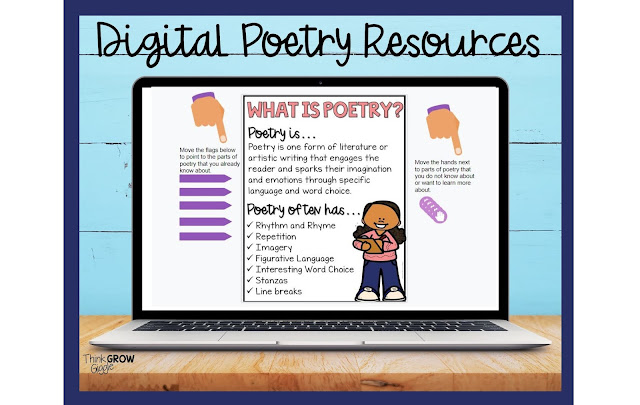
    Looking for digital resources for direct lessons on poetry? 
    Click HERE.


    at home and distance learning poetry ideas


    Love these ideas? Pin for later!


    poetry at home distance and digital learning Google Classroom


    245


    signature
    Back to Top