Whether you are getting ready to learn about Groundhog Day or learning about persuasive writing, holding a classroom debate is the perfect activity!
Turn your classroom into a courtroom and hold your own high-interest debates in your classroom to engage students and practice persuasive writing, argumentative discussions, and speaking and listening skills in a safe and structured environment.
Debates provide students with the opportunity to see that it is OK to disagree with their peers. It also helps them to understand different perspectives and points of view on a variety of topics.
This can include different holiday and seasonal topics like to have more winter or early spring (think Groundhog Day), should pranks be allowed at school (think April Fools Day), or a generic high-interest topic like, should homework be assigned? which is perfect to tie into Election Day activities!
I love using debates in the classroom.
I love using debates in the classroom.
Not only does it address multiple skills and objectives, it allows students to put all of their persuasive writing strategies and knowledge into action within a real world activity.
While working on debate projects, students will sharpen ALL of these skills:
The best part about holding debates is that it is naturally engaging for students. By directly teaching students how to participate in a debate even your most timid students and reluctant writers will be ready to participate.
Here is how I break down and explain this genre of writing for my upper elementary students to help them understand the nuances specific to debates, as well as make connections to persuasive writing.
 It is important to me to let students in on the "why" behind the lessons that I teach. When students participate in debates they develop listening and speaking skills. They begin to understand both sides of an argument and gain perspective from their peer's point of view. Additionally, by practicing public speaking in the form of a speech, students' fear of speaking in front of peer groups will decrease. Students need a lot of time to practice speaking in public. Help students get over any insecurities and fear by having them work in groups to debate different topics throughout the year. The more practice they have, the better!
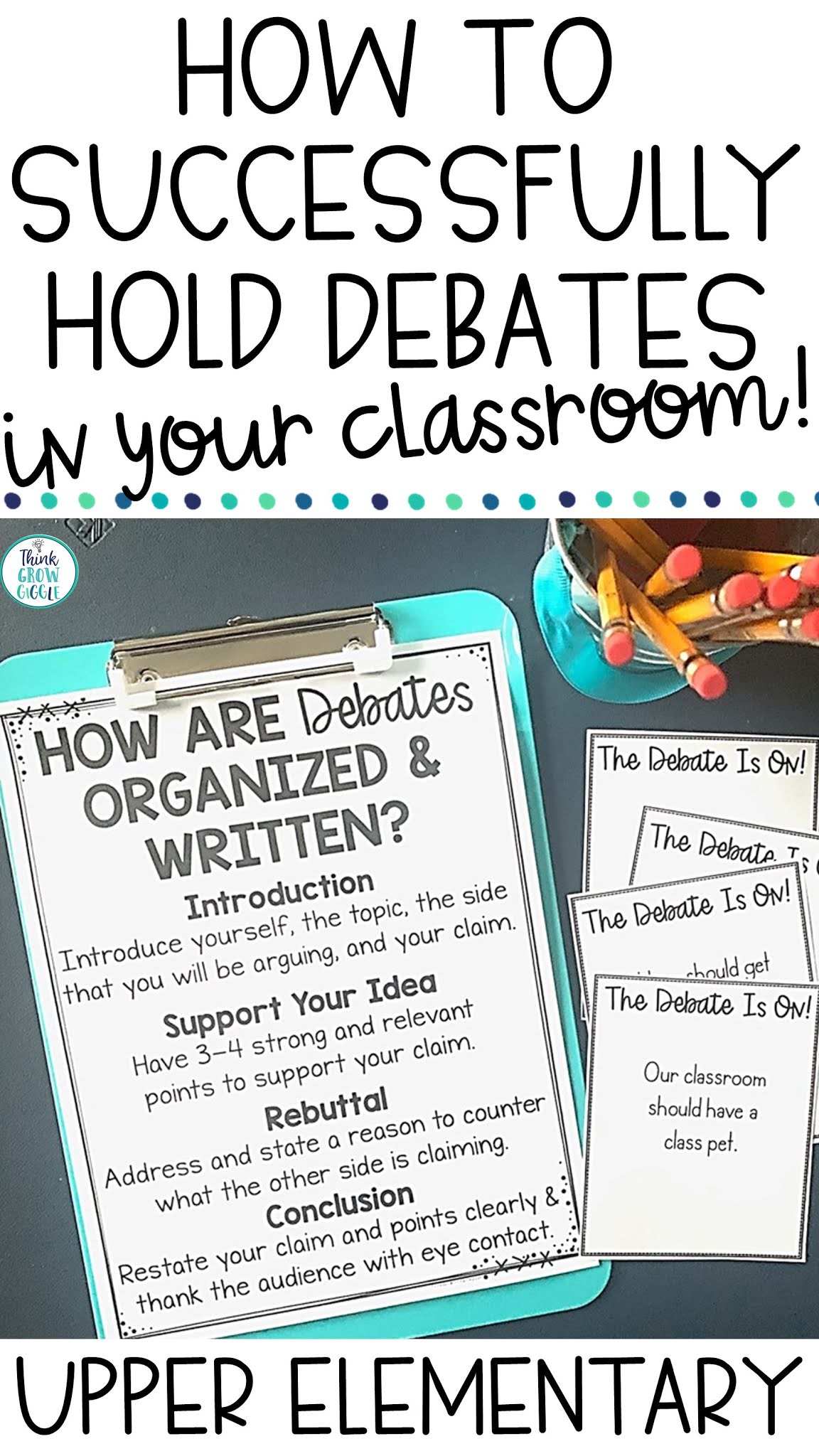
 Debate speeches are organized in a familiar format for students. It begins with an introduction, requires supporting details, and ends with a conclusion. This is the same structure that students use when writing about reading. The major difference is the rebuttal component. The idea of a rebuttal is new for upper elementary students so it takes center stage of my lessons. Here is the debate structure I use with my students:
 The key elements that students need to understand when it comes to debates are pros, cons, and rebuttals. To fully understand these concepts students need direct instruction and practice. I love to use modeled writing to help students identify the different elements of debates, especially these three areas:

While working on debate projects, students will sharpen ALL of these skills:
- persuasive writing
- reading
- research and note-taking
- point of view
- listening and speaking
- collaboration and teamwork
- public speaking and eye contact
- conversation etiquette
Here is how I break down and explain this genre of writing for my upper elementary students to help them understand the nuances specific to debates, as well as make connections to persuasive writing.
What is a Debate? What is Persuasive Writing?
Writing debates is always part of our persuasive writing unit. I love that debates give students the opportunity to use their persuasive writing skills in real-world situations. Here is how I define both persuasive writing and debates for my students:- Persuasive writing is a form of opinion writing used to convince others to think in a certain way and persuade the readers to share the writer's point of view.
- A debate is a formal argument in which there are two sides that take opposing viewpoints and discuss them in an organized and structured way while trying to persuade listeners to share the speaker's point of view.
By using these definitions, students can easily see the connection between persuasive writing and debate work. We also discuss that a judge will listen to both sides of the debate and decide which side made a better "case" and supported the argument.
Why Participate in a Debate?
It is important to me to let students in on the "why" behind the lessons that I teach. When students participate in debates they develop listening and speaking skills. They begin to understand both sides of an argument and gain perspective from their peer's point of view. Additionally, by practicing public speaking in the form of a speech, students' fear of speaking in front of peer groups will decrease. Students need a lot of time to practice speaking in public. Help students get over any insecurities and fear by having them work in groups to debate different topics throughout the year. The more practice they have, the better!What are Genre Specific Key Words?
Just like other writing genres have key words to signal key points, so do debates. Together as a class we brainstorm persuasive writing words that would help them successfully write an organized debate speech. For example, In my opinion, Consequently, Therefore, Specifically, That is why, are some key words to help you get started brainstorming with your own students.How are Debates Organized and Written?
 Debate speeches are organized in a familiar format for students. It begins with an introduction, requires supporting details, and ends with a conclusion. This is the same structure that students use when writing about reading. The major difference is the rebuttal component. The idea of a rebuttal is new for upper elementary students so it takes center stage of my lessons. Here is the debate structure I use with my students:
- Introduction: Introduce yourself, the topic and the side you will be arguing for, and your claim
- Support Your Idea: Have 3-4 strong and relevant points to support your claim
- Rebuttal: Address and state a reason that will counter what the opposing side is claiming
- Conclusion: Restate your claim and points and then thank the audience with eye contact.
What Makes a Debate Different than Persuasive Writing?
- Pro: The pros or proposition side of a debate is the affirmative side. It is the why you believe in the side of the topic you are debating. The pros are for the topic at hand.
- Con: The con side of a debate is the negative side. It is the why you do not believe in the topic. A con is against the topic at hand.
- Rebuttal: A rebuttal is a statement made about the opposing side's claim to explain why their claim is wrong.
What are the Steps of a Debate?
Once students write their debate speeches it is time to actually debate. Since debates are structured and organized in such a way that allows both sides to have equal time to speak, students must be aware of the format. Here is a shortened version of the debating speaking order that I use with upper elementary students.- Affirmative side speaks to state their claim and supporting details.
- Negative side speaks to state their claim and supporting details.
- Negative side states their rebuttal and closing.
- Affirmative side states their rebuttal and closing.
A Few Tips and Tricks...
- Help students prepare for the debate by creating a checklist to keep them organized.
- Allow students to pick their own side or mix it up by randomly assigning which side they will be "for". This is a great way to differentiate for your top writers, too.
- Assign cooperative group roles to help students stay on track! I have found the best roles to use for debating units are recorders, time keeper, and speakers.
- Do not try to have students memorize their speeches. Instead, have students write their speeches in bullet form to help them read it fluently while they are presenting.
- Encourage students to practice their debate speeches within their small groups several times before presenting to help build their confidence.
- Since speaking in front of their peers can be intimidating, help them feel positive by giving a lot of encouragement and positive praise.
- Make it fun! Make the kids laugh and giggle at YOU by dressing up as a judge complete with a gavel to take the pressure off the kids!
- Use the holidays and seasons to engage students in meaningful topics to debate:
- Perfect for the long winter and Groundhog Day: Debating over Winter or Spring
- Who doesn't love April Fools' Day: Debating over Pranks Being Played at School
- Tie seasonal debates with history: Thanksgiving Debate and Columbus Day Debate
- Use current events and topics of interest for debates, such as:

Holding debates in the classroom is a fun and engaging way to keep students working hard and practicing so many different skills at once. Provide students with many opportunities to debate over topics in the classroom. Not sure of an idea to have students debate about? Ask them! They always come up with the best topics to debate.
You might be interested in this printable AND digital debate resource.
Love these ideas? Pin for later!
*affiliate links: “Think Grow Giggle is a participant in the Amazon Services LLC Associates Program, an affiliate advertising program designed to provide a means for sites to earn advertising fees by advertising and linking to Amazon.” (source: Section 5)